
How Much Does It Cost to Transport HDD Waste and How Can Solidification Reduce That Cost?
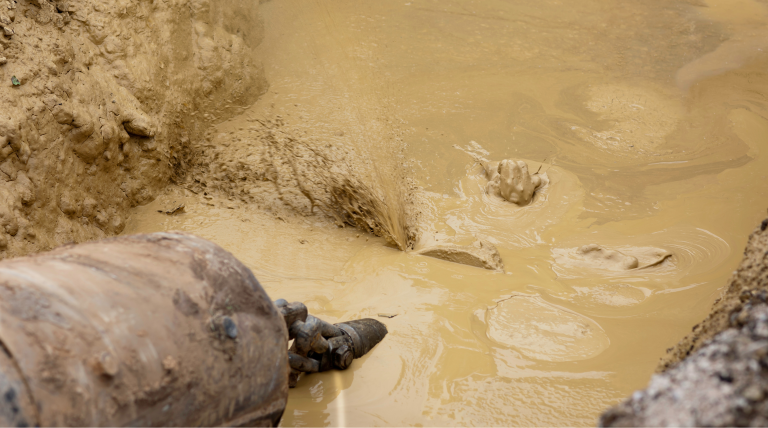
In a Horizontal Directional Drilling (HDD) operation, costs do not stop when drilling advances. The drilling mud and returns generated during the project need to be stored, handled, transported, and properly disposed of. Depending on the volume produced, material characteristics, distance to the disposal facility, and local requirements, this process can represent a significant portion of a project’s operating costs.
That is why looking only at drilling costs can leave an important part of the equation out:
How much does it cost to manage the material once it returns to the surface?
The Cost of HDD Waste Logistics
An HDD project can generate large volumes of drilling fluid, typically consisting of water, bentonite, polymers, and excavated materials such as gravel, clay, and silt.
As long as this material remains fluid, handling it may require specific equipment, temporary storage, and transportation suited to its physical characteristics.
In practice, several factors directly affect cost:
- Number of trips required to remove material from the jobsite
- Type of transportation equipment required
- Loading and travel time
- Distance to an approved disposal facility
- Applicable disposal fees
- Available onsite storage capacity
- Impact of waste logistics on drilling productivity
When drilling mud is generated faster than it can be removed, transportation is no longer the only concern. Available storage capacity can become a constraint on the operation itself.
For this reason, the cost of drilling mud should be evaluated as part of the project’s overall logistics, not simply as a disposal expense.
Why Does Transporting Water Increase Costs?
A significant portion of drilling mud volume comes from water.
When material leaves the jobsite in a fluid state, transportation capacity is being used to move that water along with the solids contained in the drilling mud.
Recycling systems, shakers, and centrifuges can reduce this volume and allow some drilling fluid to be recovered and reused. Even after these processes, however, the remaining material still needs to be managed.
This is where onsite solidification can provide another option.
What Is HDD Drilling Mud Solidification?
Solidification involves incorporating a reagent into wet or fluid material to reduce its mobility and produce a non-flowable and, when technically achievable, stackable material.
Performing this process onsite can simplify subsequent handling and transportation.
Performance, dosage, and processing time depend on several factors, including moisture content, drilling mud composition, soil characteristics, available equipment, and project-specific requirements.
For this reason, reagent selection should not be based solely on the amount of liquid present. Different drilling muds may require different formulations and application strategies.
How Can Solidification Reduce HDD Operating Costs?
The primary opportunity is to change how the material can be handled before it leaves the jobsite.
1. Fewer Transportation Trips
Non-flowable, stackable material can allow transportation capacity to be used more efficiently, depending on the equipment and project conditions.
Reducing the number of trips can also reduce truck hours, fuel consumption, operator time, and other logistics-related costs.
2. More Options for Handling and Disposal
The physical characteristics of the material can influence the options available for transportation and disposal.
Solidification may expand operational alternatives when the resulting material meets the characterization, transportation, and disposal requirements applicable to the project and jurisdiction.
Final acceptance should always be confirmed with the appropriate authorities and receiving facilities.
3. Less Dependence on Immediate Removal of Fluid Material
When material can be conditioned onsite, the operation may become less dependent on a continuous cycle of removing fluid material by truck.
This can be particularly valuable for projects with limited storage space, high volumes, or long transportation distances.
4. Reduced Material Mobility During Transportation
Converting drilling mud from a fluid state into a non-flowable condition reduces its mobility during handling and transportation.
In addition to simplifying logistics, this can help reduce the potential for spills associated with transporting fluid materials.
A Real-World Example at Project Scale
During a pipeline replacement project covering approximately 35 km in the Hamilton, Ontario area, an HDD operation generated more than 1,860 m³, approximately 492,000 U.S. gallons, of drilling mud and cuttings over the course of the project.
The solidification system was sized to keep pace with material generation, processing between 82 and 95 gallons per minute and handling daily peaks exceeding 30,000 gallons.
The most relevant part of this example is not simply the volume processed. It is the integration between solidification capacity and the pace of the drilling operation.
On large-scale projects, drilling mud management needs to keep up with drilling productivity. Otherwise, storage, handling, and transportation can become operational bottlenecks.
The Right Solution Starts With Understanding the Drilling Mud
Not every HDD drilling mud has the same characteristics.
Soil type, moisture content, bentonite, drilling polymers, fines, and project conditions can significantly affect how the material behaves.
For this reason, applying the same solution to every project can result in unnecessary reagent consumption or performance that does not match the project’s requirements.
A technical evaluation should consider the actual material generated onsite and determine an appropriate formulation and dosage for those specific conditions.
How MetaFLO Approaches HDD Solidification
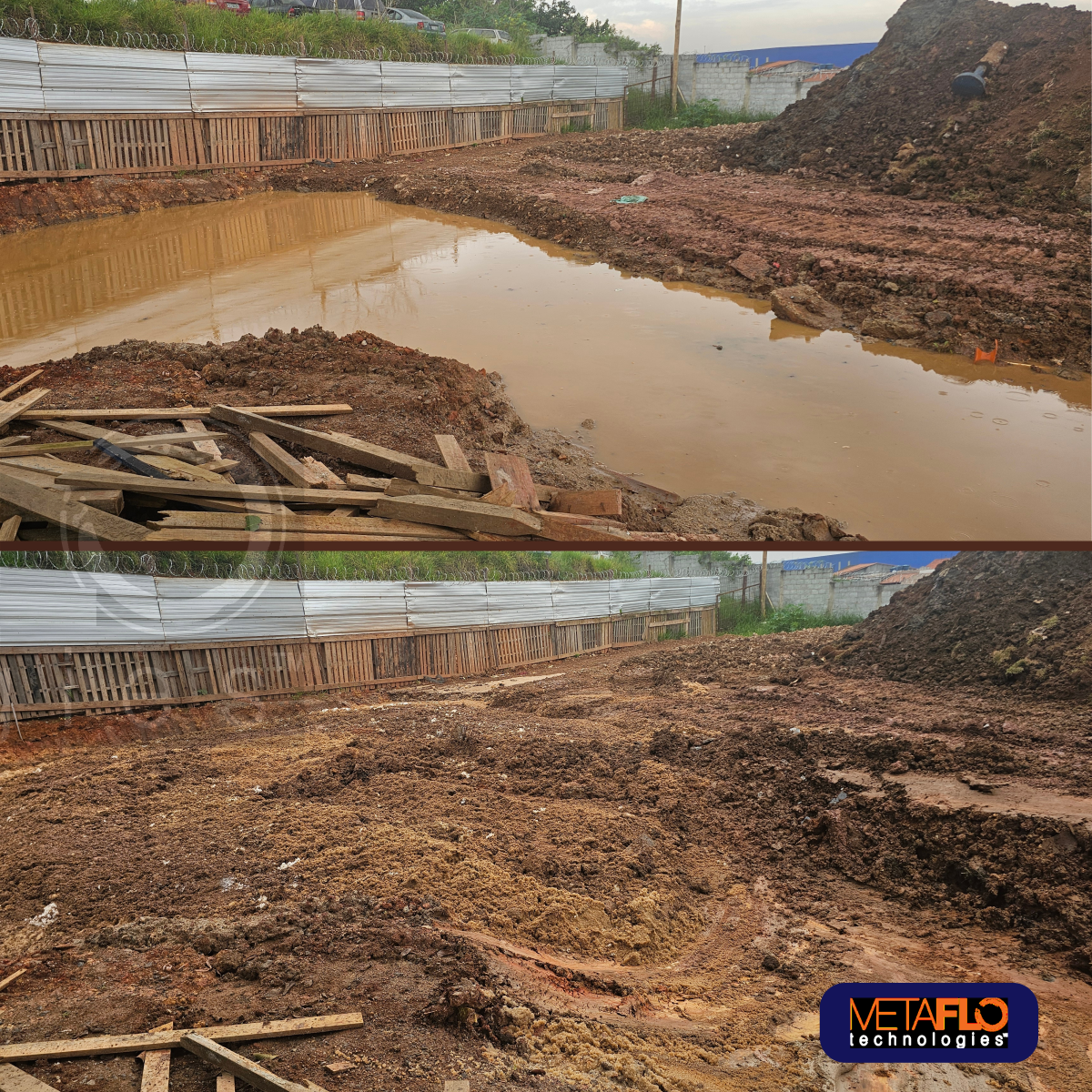
MetaFLO Technologies has more than two decades of experience developing solidification solutions for difficult-to-manage materials, including Horizontal Directional Drilling applications.
Rather than relying solely on an off-the-shelf approach, MetaFLO develops exclusive solidification reagent formulations that can be adjusted to the material characteristics and requirements of each application.
This approach combines technical evaluation, reagent selection, dosage optimization, and field application support.
For HDD operations, the objective is to convert drilling mud into a condition that can be handled and transported efficiently without creating another bottleneck for the operation.
MetaFLO also works with different reagent technologies and formats, allowing each project to be evaluated according to factors such as drilling mud composition, geography, available equipment, and project requirements.
How Much Is Your Operation Really Spending to Transport HDD Drilling Mud?
Answering that question requires looking beyond the disposal fee alone.
The complete cost should consider:
Transportation + number of trips + equipment hours + labor + distance to disposal + storage + impact on project productivity.
For many projects, the opportunity to reduce costs begins before the truck leaves the jobsite.
Evaluating solidification as part of an HDD drilling mud management strategy makes it possible to consider not only the cost of the reagent, but also its potential impact on the operation’s overall logistics.
Want to evaluate how solidification could fit into your HDD operation?
Contact MetaFLO’s technical team to discuss your material characteristics, project requirements, and the solidification options available for your application.
تقنيات ميتافلو
[email protected]
1-888-862-4011
 English
  Português do Brasil
  Español
  العربية
  Français
  Italiano