MetaFLO Technologies  ·  Solidification Reagents (MF)

Dark MF003

MF003 is a reagent by MetaFLO Technologies for solidification of liquid waste and sludge.

An environmentally safe solidification reagent designed to simplify the handling, transport, and disposal of challenging liquid waste streams including EPB-TBM spoil, micro-tunneling slurry, water-based drilling fluids, sewage sludge, stormwater pond sediments, and hydro excavation mud.

In plain terms

MF003 is a solidification reagent by MetaFLO Technologies that is applied directly into liquid waste streams to rapidly transform them into stackable solids for easier handling, transport, and disposal in less than 30 minutes. Designed for applications including micro-tunneling slurry, EPB-TBM spoil, water-based drilling fluids, sewage sludge, stormwater and wastewater pond sediments, and hydro excavation mud, MF003 helps simplify waste management operations while reducing free liquids and improving material handling conditions.

< 30min

To solidify liquid waste

Up to 67%

Lower disposal logistics costs

Up to 30%

Lower disposal costs

0.1–1.0%

Low dosage application

What is MF003?

MF003 is a white granular solidification reagent designed to rapidly convert liquid and semi-liquid waste streams with variable solids content into a dry, granular solid with no free liquids. It is used to treat drilling mud, drilling sludge, tunneling spoil, TBM and EPB slurry, HDD drilling fluids, wastewater sludge, and other high-moisture residues.

The technology helps waste generators meet EPA Paint Filter Test criteria by transforming wet waste into a stackable, landfill-compatible material that is easier to handle, transport, stockpile, and dispose of.

MF003 delivers rapid in-situ solidification in less than 30 minutes, producing a stable granular residue with minimal sensitivity to ambient humidity. The technology has passed microtoxicity testing and is designed for tunneling, drilling, environmental, and wastewater treatment operations.

What problems does MF003 solve?

Managing liquid waste, drilling mud, sludge, and wet spoil from tunneling, drilling, wastewater operations, stormwater sediment removal, and hydro excavation activities is costly, logistically complex, and increasingly regulated. Conventional solidification methods such as lime, sawdust, drying pits, or evaporation ponds often increase waste mass, occupy valuable operational space, and delay disposal workflows. Inadequately treated waste can also release free liquids during handling and transport, creating operational challenges and disposal restrictions.

MF003 addresses these challenges from generation to final disposal. Applied at typical dosages ranging from 0.1–1.0%, MF003 rapidly transforms liquid and semi-liquid waste into a stackable material in under 30 minutes. The treated material reduces free liquid release and improves handling, transport, stockpiling, and disposal operations.

The result: simplified waste management operations, improved material handling conditions, approximately 30% lower disposal costs, and up to 67% lower logistics costs compared with conventional solidification methods.

How does MF003 work?

With low dosage rates typically ranging from 0.1–1.0% relative to waste mass, MF003 is applied directly onto wet material and mechanically mixed using excavators or similar equipment.

The reagent allows rapid solidification, transforming sludge, drilling fluids, slurry, wet spoil, and liquid waste streams into stackable material suitable for transportation and disposal operations.

MF003 creates a stable material that reduces free liquid release during handling and supports easier operational management of wet waste streams.

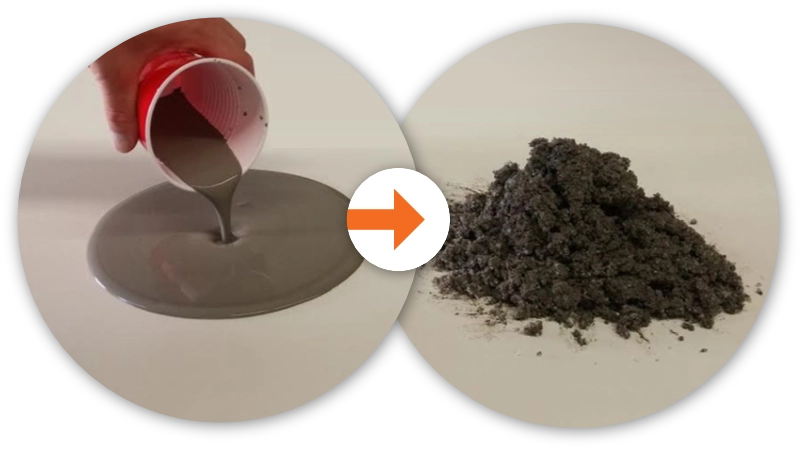
Before and After MF003 Solidification Reagent

Before and After MF003 application

How does MF003 compare?

Criteria Calce
(quicklime /
hydrated lime)
Il cemento Segatura Mechanical
drying
(centrifuges)
Natural
drying
Geobags MF003
Dosages ~5.0% dosage ~10.0% dosage ~30.0% dosage 0.1–1.0% dosage
Ease of handling or mixing Low Low High Medium Medium Medium High
Response speed until material stops leaching ~24 h >24 h >24 h Depends on centrifuge Weeks Weeks <30 min
Physical strength gain Limited High None None None None Not the objective
Chemical stability over time Can leach Variable Low High
Exothermic reaction Yes May occur No No Does not generate
Transportation cost reduction Medium Low Low Medium Medium Medium Up to 67% reduction
Disposal cost reduction Medium Low Low Medium Medium Medium Around 30% reduction
Classification as solid (non-leaching) Not always Not always Not always Not always No Not always Meets Paint Filter Test (EPA 9095)
Environmental risk Medium / High Medium / High Medium Medium High Medium Low

How to apply MF003

1. Analyze the waste material

Evaluate the waste type, water content, density, and handling requirements to define the appropriate MF003 dosage. Typical application rates generally range from 0.1–1.0%.

2. Apply MF003 directly onto the wet material

Spread the reagent directly over sludge, drilling fluids, spoil, sediments, or liquid waste streams in pits, tanks, ponds, containers, stockpiles, or staging areas.

3. Mechanically mix the material

Mix using excavators or similar equipment to ensure uniform distribution and full contact between MF003 and the wet material.

4. Allow solidification

MF003 allows rapid solidification, transforming the waste into a stable and stackable material in less than 30 minutes.

5. Transport, stockpile, or dispose

Once solidified, the material can be handled using conventional equipment for transportation, temporary stockpiling, or disposal operations.

Where MF003 is used

MF003 can be applied across tunneling, drilling, environmental, stormwater, hydro excavation, and wastewater operations
that generate liquid waste, sludge, slurry, sediment, or wet spoil requiring rapid solidification and easier handling.

Micro-tunneling operations

Solidifies wet excavated material and slurry after excavation activities to simplify transportation, stockpiling, and disposal operations.

EPB-TBM tunneling operations

Helps manage wet spoil and tunneling slurry by transforming liquid material into stackable solids for easier operational handling.

Water-based drilling fluids

Rapidly solidifies spent water-based drilling fluids prior to transportation and disposal.

Stormwater and wastewater pond sediments

Solidifies wet sediments and dredged material removed from ponds and containment systems prior to transportation and disposal.

Water-based drilling cuttings

Applied after primary solids-control equipment to improve handling and transportation conditions of wet cuttings.

Sewage sludge

Helps transform sewage sludge into stackable material suitable for handling, transport, and disposal operations.

Hydro excavation mud

Helps manage hydro excavation mud by reducing free liquid and improving handling conditions during transportation and disposal activities.

Supports operational waste management

MF003 is designed for liquid immobilization and operational solidification of wet waste materials without functioning as a contaminant treatment technology.

The reagent rapidly reduces free liquids and improves handling conditions, helping operators simplify transportation, stockpiling, and disposal activities for difficult wet waste streams.

Final disposal pathways and material classification should always follow local regulations and project-specific environmental requirements.

MF003 in the field

Tunneling Waste

Rapid Slurry Solidification

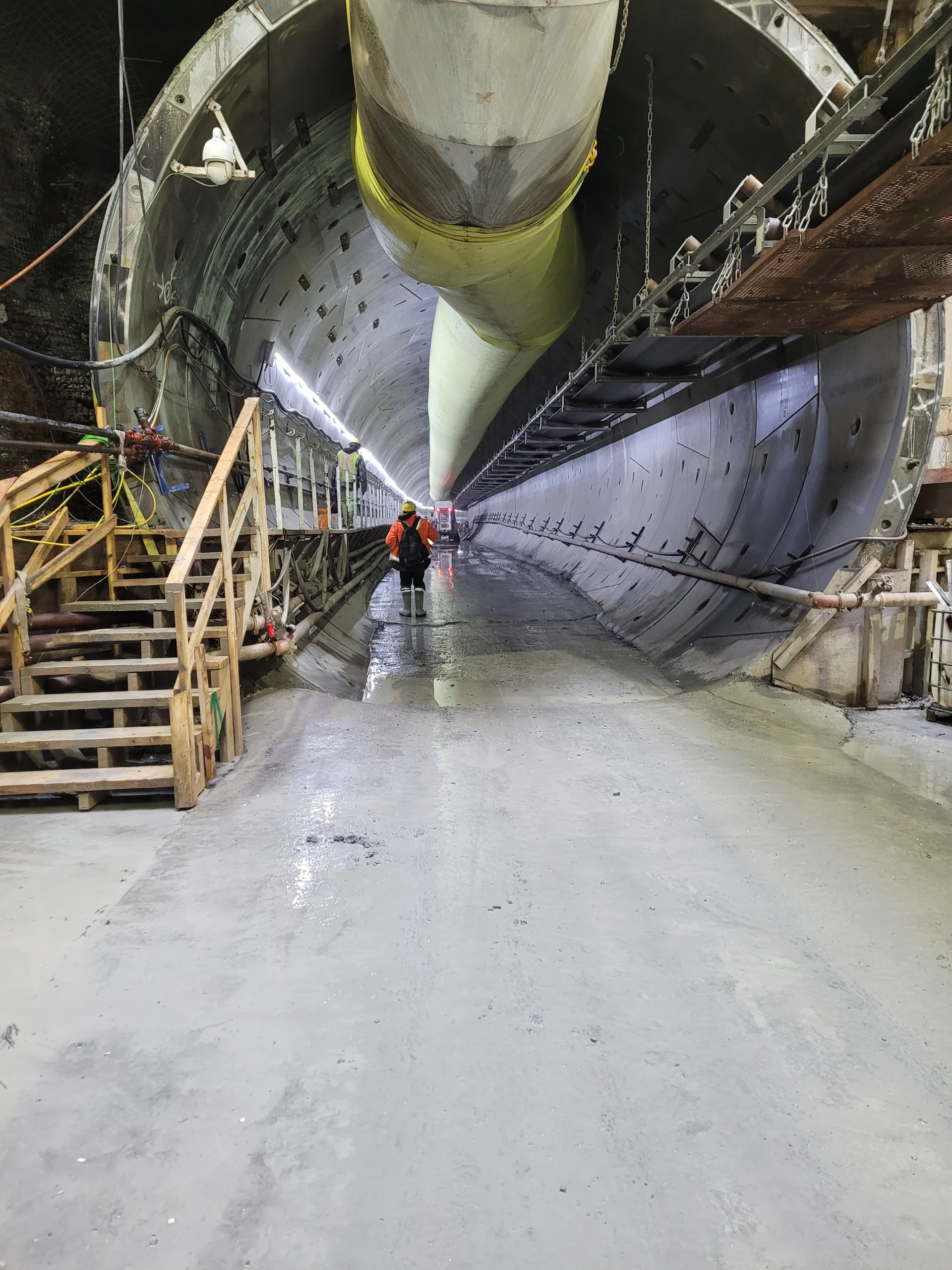
MF003 rapidly solidified tunneling slurry and wet spoil during the NorthConnex Tunnel Project in Australia, transforming liquid waste into stackable material for easier transportation and disposal while improving excavation logistics. The solution achieved solidification within minutes, generated approximately $200 per tonne in savings, reduced dependency on vacuum trucks, and produced landfill-compatible material.

HDD Slurry

Cost Reduction in Drilling Logistics

MF003 transformed HDD drilling slurry into stable, stackable material for safer handling, transportation, and disposal operations while reducing dependence on long drying cycles. The technology achieved solidification in less than 30 minutes using typical dosage rates of only 0.1–1.0%, helping reduce disposal logistics costs by up to 67% and disposal costs by around 30%.

Disposal and compliance references

Liquid waste solidification projects should be evaluated according to waste classification requirements, free-liquid criteria, transportation conditions, disposal regulations, and site-specific operational requirements. MetaFLO Technologies can provide technical guidance, dosage recommendations, and application protocols for sludge, slurry, drilling waste, and liquid waste solidification operations.

EPA Paint Filter Test (Method 9095B)

The United States Environmental Protection Agency (EPA) uses the Paint Filter Liquids Test (Method 9095B) to determine the presence of free liquids in waste materials for landfill disposal and waste classification purposes. Materials that release free liquid during the test are considered liquid waste.

EPA Test Method:
9095B Paint Filter Liquids Test

Common evaluation criteria:

  • Absence of free liquids
  • Non-leaching solid material
  • Landfill disposal suitability

Landfill disposal & free-liquid restrictions

Many North American landfill regulations restrict or prohibit the disposal of waste containing free liquids. Paint Filter Test criteria are commonly referenced to evaluate waste acceptance for landfill disposal and transportation.

Typical operational objectives:

  • Reduction of free liquids
  • Improved stackability
  • Reduced leaching risk
  • Lower transportation costs
  • Landfill-compatible solid material

Liquid waste handling

Drilling mud, slurry, sludge, and wet residues may be classified as liquid waste depending on their composition and free-liquid content. Solidification technologies are commonly used to simplify handling, transportation, and disposal logistics.

Common operational sources:

  • HDD drilling fluids & TBM/EPB slurry
  • Wastewater sludge
  • Stormwater sediments

Environmental profile

Environmentally friendly formulation

MF003 is an environmentally friendly solidification solution designed to immobilize free liquids while preserving the fundamental characteristics of the treated waste material.

Operational compatibility:

  • Compatible with landfill disposal operations
  • Supports stackable and non-leaching material generation
  • Applied directly onto wet material
  • Compatible with excavators and standard mixing equipment
  • No specialized solidification infrastructure required

Technical note: Performance may vary according to waste composition, solids content, water content, density, mixing efficiency, environmental conditions, and operational practices. Site-specific laboratory evaluations and field trials are recommended before full-scale implementation to define the appropriate MF003 dosage and application methodology.

Common questions

What is MF003 used for?

How does MF003 solidify liquid waste?

How fast does MF003 work?

What types of waste can MF003 treat?

What is the Paint Filter Test (EPA 9095B)?

Does MF003 help pass the Paint Filter Test?

What dosage of MF003 is typically used?

Can MF003 replace lime or sawdust for sludge solidification?

Is MF003 compatible with landfill disposal?

Can MF003 be used for HDD drilling waste management?

Can MF003 be used in tunneling operations?

Let's talk about your project

Tell us your soil conditions and site requirements. We'll recommend the right treatment, arrange lab testing, and support your first application.