
The Third Wave of Solidification for Modern Tunneling

MetaFLO develops custom-engineered solidification technologies for tunneling operations, helping contractors manage tunnel muck more efficiently. Our solutions help contractors improve spoils handling, reduce free liquids, optimize excavation logistics, and support safer and more efficient tunnel muck handling, transportation, and disposal.

Operational Highlights

Tailored for Different Geologies

Optimize Excavation Logistics

Reduce Free Liquids

Support Tunnel Advancement

Improve Spoils Handling

Tunneling and Drilling Solutions for Modern Underground Infrastructure

Modern tunneling projects face increasing operational pressure related to tunnel muck handling, management, disposal logistics, and environmental compliance. From EPB TBM operations and microtunneling projects to large-scale underground infrastructure works, contractors are constantly challenged by unstable excavated material, difficult transportation conditions, and growing disposal restrictions.

MetaFLO Technologies develops custom-engineered solidification and tunnel muck management solutions designed specifically for tunneling operations. Rather than relying on generic absorbents or standard off-the-shelf reagents, MetaFLO works alongside contractors and engineering teams to develop technologies tailored to actual geological and operational conditions.

The Third Wave of Solidification

For decades, tunneling operations relied on traditional materials such as cement, lime, and other absorbent additives to manage wet excavation spoils. These approaches often required high consumption rates, created inconsistent results, increased transportation weight, and offered limited operational control.

The second generation introduced generic SAPs (super absorbent polymers), which improved water absorption but were still developed as universal solutions, ignoring the massive variability between projects.
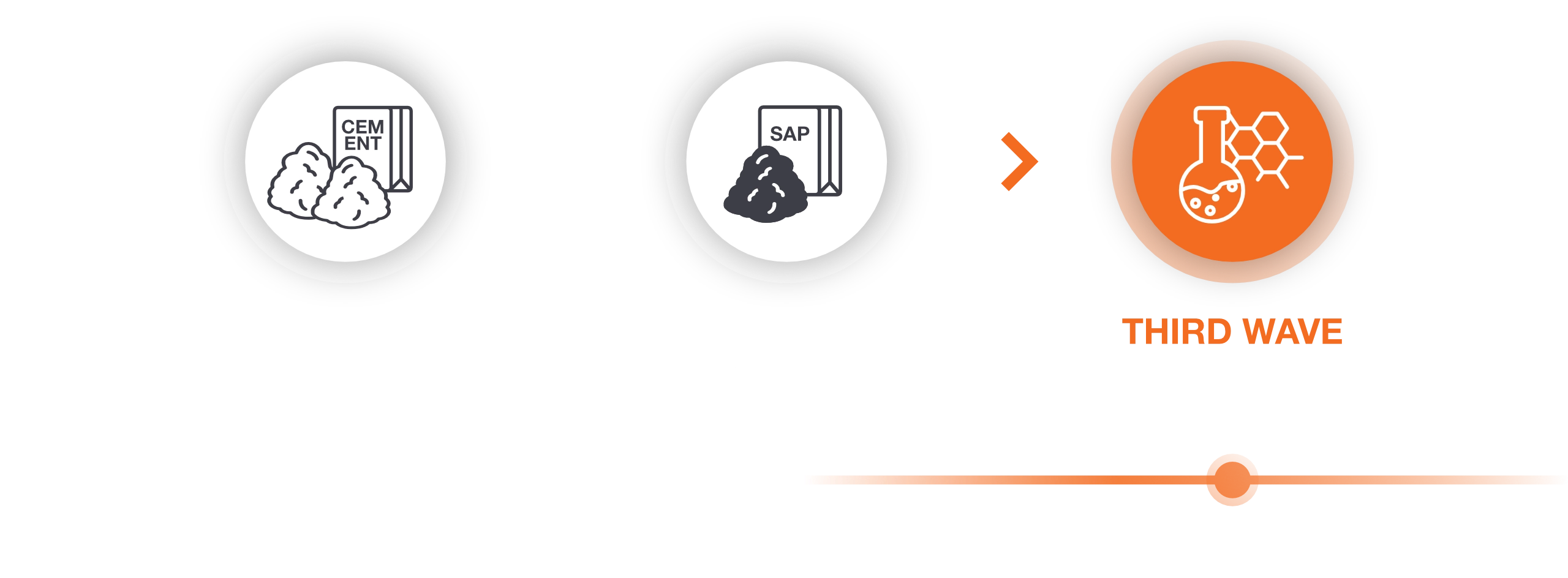
Third Wave in Tunneling

MetaFLO represents the third wave: custom-engineered chemistry designed around real tunneling conditions. Instead of applying the same reagent everywhere, we engineer solutions based on:

Geological conditions

Transportation requirements

Excavation methods

Operational goals

Bentonite presence

Slurry behavior

Moisture content

Disposal limitations

Mineral composition

Environmental objectives

This approach allows contractors to achieve precise spoils management performance, improving operational efficiency and reducing unnecessary material consumption.

Main Operational Challenges

The combination of water, fine particles, clay, bentonite, and unstable soils creates logistical and environmental challenges."

High Moisture Excavated Material

Wet spoils can become unstable, difficult to transport, challenging to stack, and expensive to dispose of. High moisture material increases:

  • Transportation inefficiency & truck cycle times
  • Handling complexity & equipment utilization
  • Site congestion & operational delays

Slurry Instability & Difficult Handling

TBM and microtunneling operations frequently generate muck systems with fine solids, bentonite, and polymers, causing:

  • Poor stacking capability & liquid separation
  • Spill risks & increased cleanup requirements
  • Material instability during transport

Disposal Restrictions & ESG

Urban projects face strict environmental and logistical restrictions regarding:

  • Transportation of liquid-rich material
  • Spill prevention & water runoff
  • Temporary storage space & truck movement

Variable Geology Conditions

Because spoils behavior changes significantly depending on geology, generic approaches fail. Operations often encounter:

  • Clay, silt, or sandy formations
  • Mixed face conditions & weathered rock
  • Expansive or abrasive soils

How MetaFLO Solutions Support Operations

Rather than focusing only on waste treatment, our technologies improve the overall operational flow associated with spoils handling, slurry management, and excavation logistics.

Tunnel Muck Management

Helps improve the handling characteristics of tunnel muck, supporting:

  • Better spoils consistency & reduced free liquids
  • Improved muck handling
  • Easier material handling

Slurry and Spoils Management

Reduces operational difficulties associated with wet excavation material.

  • Easier loading, unloading, and stacking
  • Reduced liquid separation & spill risk
  • Improved temporary storage management

Transportation Optimization

By solidifying tunnel muck, contractors can improve material consistency and transportation efficiency.

  • Excess water weight & leakage
  • Material instability in transit
  • Reduced hauling efficiency

Disposal and Material Reuse

Depending on local regulations, treated spoils presents improved handling characteristics for:

  • Temporary site storage & movement
  • Disposal operations
  • Potential reuse strategies

MetaFLO Technologies Portfolio

MetaFLO offers multiple technologies that can support tunneling operations depending on tunnel muck characteristics and operational objectives.
Logo MF003

MF003 — Advanced Solidification

Designed for applications involving wet spoils, slurry systems, and liquid-rich excavation waste. Helps solidify tunnel muck in EPB TBM and microtunneling operations, improving handling and transportation efficiency.
Logo MF006

MF006 — High-Performance

For projects requiring advanced liquid reduction capabilities. Particularly valuable in high-moisture spoils and difficult excavation conditions to improve slurry stability and transport.
Logo

MF GeoDry — Free-water reduction in EPB-TBM

Engineered dry reagents designed for EPB-TBM operations requiring free-water reduction, improved spoils workability, and more efficient handling under challenging field conditions.
Logo

MF BioDry — Biodegradable Spoils Solidification

Biodegradable spoils solidification technology engineered for tunneling operations involving wet spoils, slurry systems, and liquid-rich excavation waste, helping improve spoils handling, reduce free liquids, and simplify tunneling logistics.

Logo

MF LiquidTech — Liquid EPB Spoils Solidification

Liquid-applied solidification technology developed for continuous injection systems, rapid reagent distribution, free-liquid reduction, and improved handling of high-moisture EPB spoils and slurry waste streams.

Custom Engineered Solutions

One of MetaFLO’s key differentiators. Not all spoils behaves the same way due to additives, groundwater, and soil composition. Instead of standard chemistry, we develop solutions tailored to the actual operational conditions of your project, supporting more predictable tunnel muck management.

Operational Benefits

Solidify Tunnel Muck

Improve spoils consistency and reduce separation.

Transportation Efficiency

Reduce inefficiencies of transporting unstable wet material.

Simplify Spoils Handling

Support easier loading, stacking, and temporary storage.

Improve Tunnel Muck Handling

Reduce disruptions from unstable spoils and slurry challenges.

Improve Site Logistics

Optimize spoils flow and excavation waste management.

Improve ESG Performance

Lower fuel demand, inefficiencies, and waste risks.

Typical Applications

EPB TBM Operations

Microtunneling Operations

Proven Performance in the Field

Explore our case studies to see how MetaFLO technologies have helped operations improve spoils handling, reduce free liquids, and optimize excavation logistics in real-world tunneling and drilling applications.

Frequently Asked Questions

How can tunneling projects improve spoils handling efficiency?

Why do modern tunneling projects require custom-engineered solutions?

What types of operations benefit from MetaFLO?

Find the Best Solution for Your Project

MetaFLO develops custom-engineered technologies designed around real excavation conditions to help contractors improve spoils management and optimize logistics.

Slurry Management  ·  Spoils Solidificationn  ·  Liquid waste Logistics  ·  Drilling Waste