
SoilTech in rural roads: more performance for sugarcane transport

Posizione: Montes Claros, Goiás, Brazil
Application: In situ soil stabilization for a rural road
Geotechnical and Operational Challenge
A rural road serving sugarcane transport is subjected to intense cyclic loading due to the continuous traffic of heavy vehicles. Under the action of weather conditions and mechanical wear, the natural subgrade showed rapid degradation.
Among the main manifestations were surface erosion, ravelling, pothole formation, corrugations, and permanent deformations, such as wheel ruts.
The challenge was to increase the structural bearing capacity and the shear strength of the wearing course, ensuring better traffic conditions for the agricultural operation.
Finding the best solution for the soil
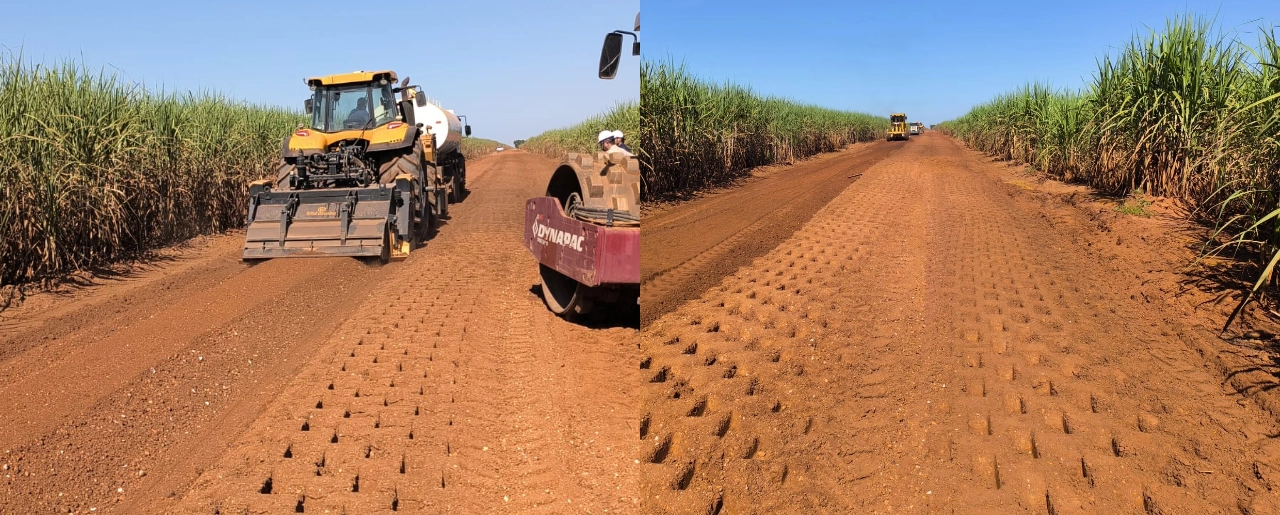
Prior to execution, MetaFLO’s engineering team conducted tests to evaluate different dosages and identify the most suitable formulation for stabilizing the material. The California Bearing Ratio (CBR) results showed the evolution of the bearing capacity with the use of SoilTech, both alone and combined with cement:
| Analyzed Formulation (Laboratory) | Achieved CBR | Bearing Support Gain (Relative) |
| Natural Soil (Reference) | 44.9% | – |
| Soil + SoilTech | 70.0% | + 55.9% |
| Soil + SoilTech + 2% CP II Cement | 111.3% | + 147.8% |
From the laboratory to the field: application efficiency
The transition from the laboratory to the field allowed validating the efficiency of SoilTech with significant results even at low dosages. Based on the studies conducted, the main application parameters and the characteristics of the in situ material were defined:
- Subgrade Characterization: Brown sandy soil. Due to its granular nature and low natural cohesion, the material is highly susceptible to water and wind erosion (caused by rain and winds), which contributed to the instability of the original road.
- Effective Field Dosage: In Section 1, chemical stabilization was performed with only 0.02% of SoilTech, allowing the reuse of the local soil. In Section 2, a combined solution of 0.02% SoilTech + 2% Portland Cement was adopted, defined to evaluate the combination’s behavior in the field.
- Relative Compaction: The field technological control indicated a degree of compaction greater than 100% in the in situ density test.
- Energy Efficiency (Compaction): SoilTech’s physicochemical action significantly improved the material’s workability, allowing it to reach the maximum design density using only 50% of the normally required mechanical compaction energy.
Field application and compaction
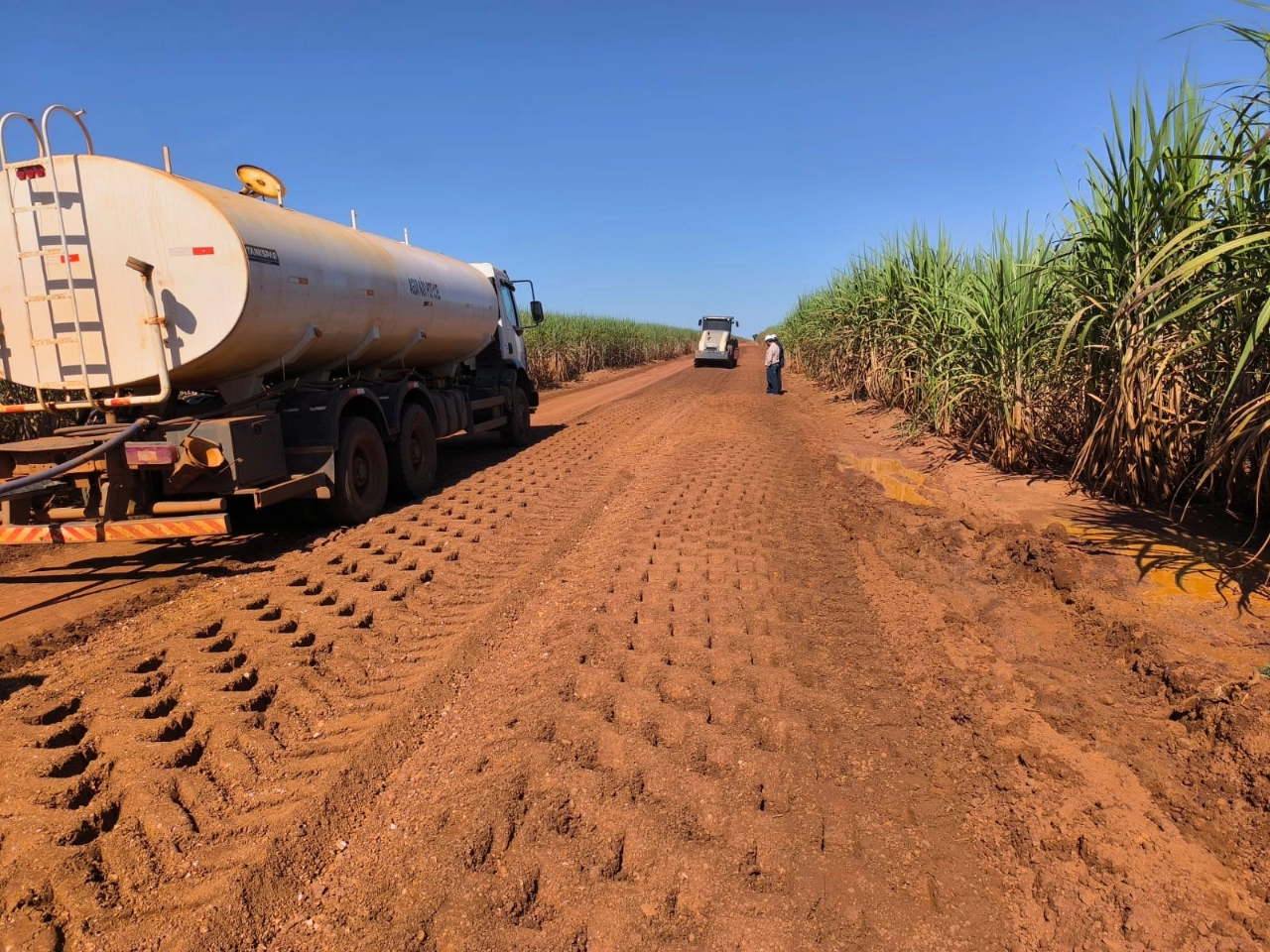
The intervention was fully mechanized to ensure the homogeneity of the mixture and strict control of the optimum moisture content:
- Soil Recycler: Used for milling, grinding, and homogenizing the natural soil with the additives at the depth defined by the project.
- Distribution and Hydration: The binders were distributed automatically, eliminating the need for manual bag opening. The water truck acted in synchronization, allowing precise control of the water application.
- Finishing: The leveling, road shaping, and layer compaction were carried out jointly by the motor grader and compaction rollers.
Proven field performance
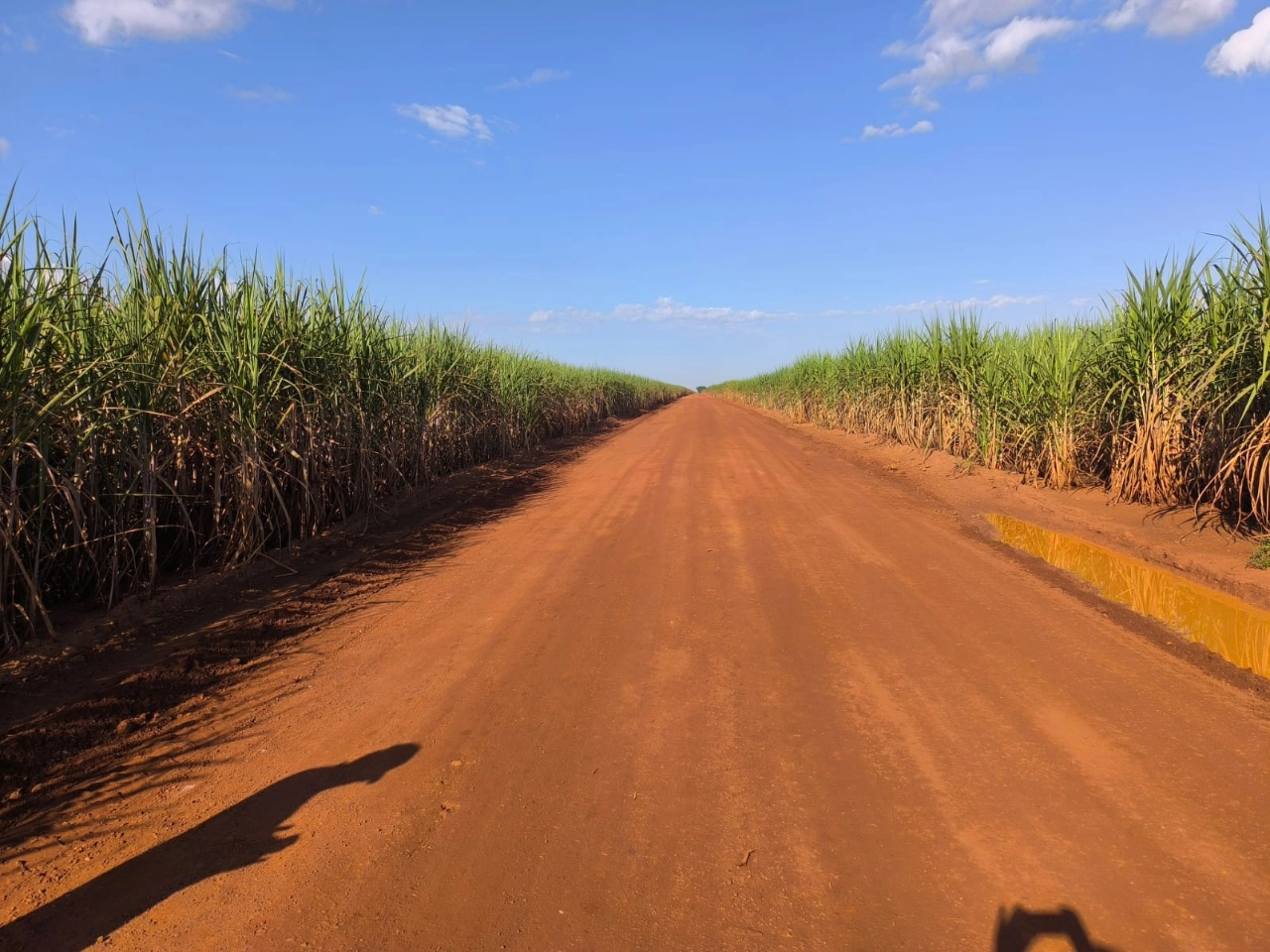
Technical inspections conducted after opening the road to heavy traffic confirmed the good performance of the stabilization. The section showed good agglutination of the sandy particles and layer integrity, with no occurrence of settlements, corrugations, potholes, or wheel ruts.
The treatment also contributed to reducing dust emissions, promoting better visibility conditions and safety for the operation of the sugarcane fleet.
SCARICA IL FILE DEL CASE STUDY
 English
  Português do Brasil
  Español
  العربية
  Français
  Italiano