
The Hidden Cost of Hauling Water: What Hydrovac Slurry Really Costs Your Operation
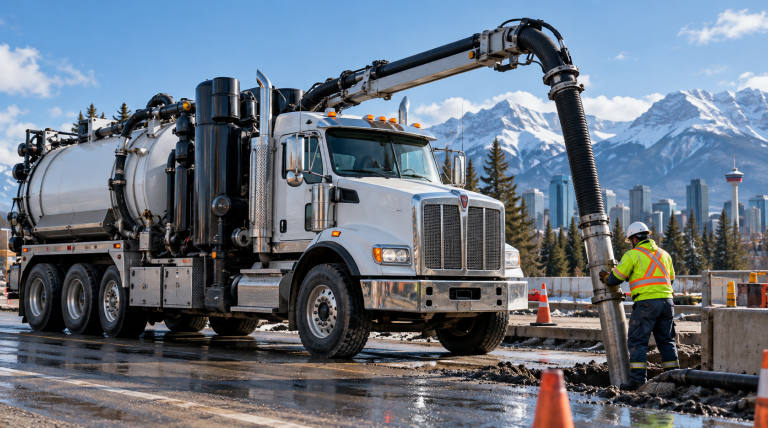
Hydrovac Truck Operating at an Urban Excavation Site
Your debris tank is full at 10 a.m.
The nearest receiving facility is 90 minutes away. There may be a line at the gate. The excavation is only half done, but the hydrovac truck is about to spend the next three hours driving there and back before waiting time and unloading are even counted.
The cost of hydrovac slurry is not only what you pay to dispose of the material. It is what your operation spends moving and managing it.
When a significant part of that material is water, the question becomes straightforward:
How much of your truck’s working day is being spent excavating — and how much is being spent hauling wet material?
The Real Cost of Hydrovac Slurry Disposal
Hydrovac work is typically priced around truck and crew time. When a truck leaves the excavation site to transport wet slurry, the cost goes beyond the disposal invoice.
The Disposal Cycle Includes More Than the Disposal Fee
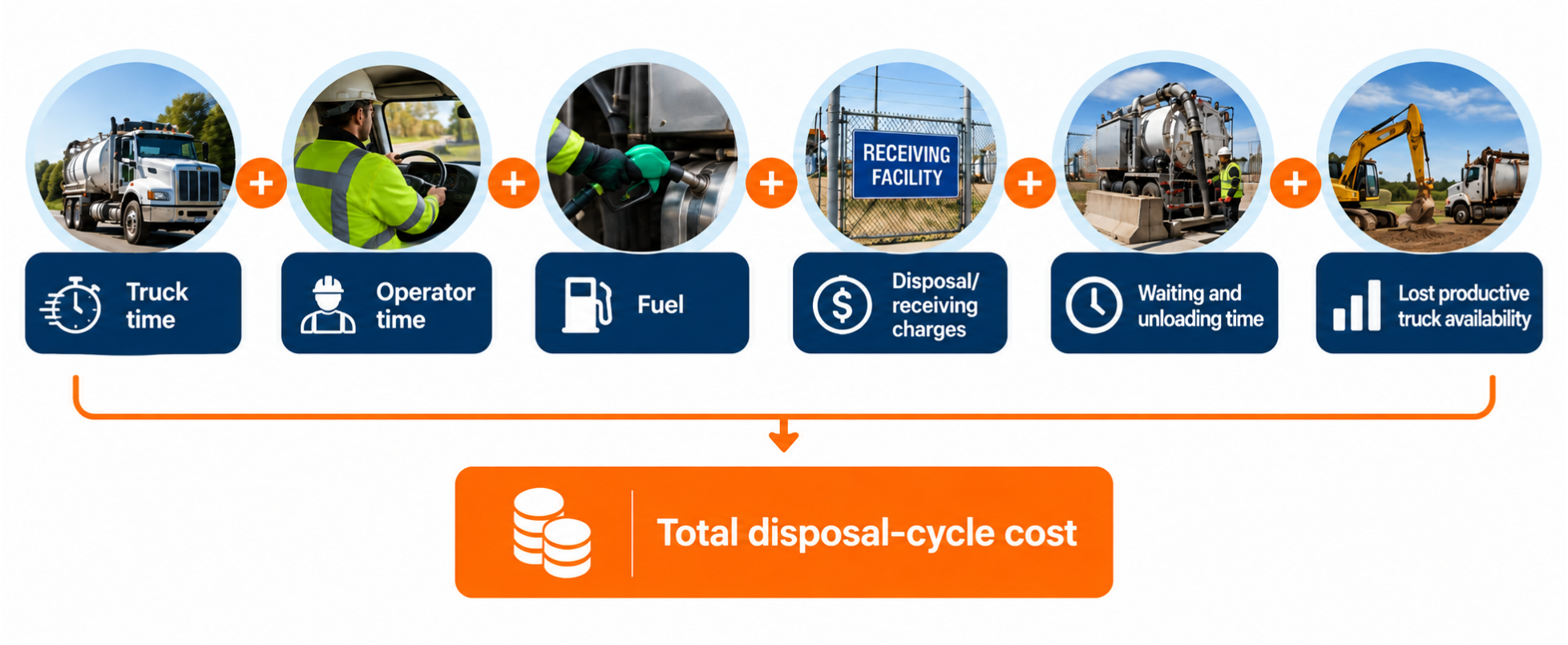
Every additional hour spent transporting, waiting, unloading or processing material can reduce the time available for productive excavation.
The Truck Is Carrying More Than Excavated Soil
Hydrovac slurry can contain significant amounts of water along with soil, rock, fines and other excavated material.
That means contractors are often transporting a mixture in which a substantial portion of the load may not be the material they ultimately need to manage.
Water Adds to the Hauling Burden
The more free water a slurry contains, the more difficult it can be to handle, transport and receive as a solid material.
This can affect:
- Truck utilization
- Number of trips
- Receiving options
- Processing requirements
- Labour
- Disposal costs
Cost per Load Can Hide the Bigger Problem
A disposal invoice may show a cost per load, but that number does not capture the full operational impact of removing a hydrovac truck from the excavation cycle.
Calculate the Full Disposal Cycle
Consider:
- Truck time
- Operator time
- Fuel
- Disposal and receiving charges
- Waiting and unloading time
- Lost productive truck availability
Looking at the complete cycle provides a clearer picture of what wet slurry management is costing the operation.
Free Water and Hydrovac Slurry Management
Free water is an important factor in how hydrovac slurry is handled, transported and received.
EPA Method 9095B can be used in specific regulatory contexts to determine the presence of free liquids in a representative waste sample.
Why Free Water Matters in Material Handling
Reducing free water can change the physical handling characteristics of the material.
However, solidification does not physically increase tank capacity, automatically eliminate disposal trips or change a material’s regulatory classification.
Controlling Free Water Starts With the Material
Solidification reagents are designed for high-moisture materials, including materials with approximately 30% to 80%+ moisture content.
Reference dosages can range from 0.1% to 0.70%, depending on the material and application.
Dosage and Set Time Are Site-Specific
A stackable result can be achieved in under 30 minutes in applicable applications.
The final dosage and set time must be confirmed through material-specific testing.
What This Looked Like in the Field
Field applications show why the material-management strategy needs to be matched to the specific slurry and operating conditions.
Utility Hydrovac Operation
In one utility application, high-moisture vacuum-excavated material was initially managed using settling tanks, surface-water separation and dry bulking.
The additional bulking material increased volume and contributed to higher transport, disposal and labour requirements.
A reagent was mixed directly into the material using existing site infrastructure at 0.5% wt/wt.
The treated material reached an earthlike condition, with ~30% lower total waste-management costs.
Pipeline Integrity Project
In a pipeline application, approximately 200 m³ of hydrovac waste was managed in shale bins rather than in-ground sumps.
Solids and surface water were separated. The heavier mud was treated with approximately 1% wt/wt reagent, and the separated water was returned to complete the solidification process.
The resulting material had an earthlike consistency, reducing dependence on liquid-waste transport and disposal volume.
Two projects. Two different material-management systems. Two different dosages. That difference matters.
From Slurry Management to Solidification Strategy
The objective is not simply to add a reagent to wet material. The objective is to develop a material-management approach that fits the site’s operational requirements.
Site-Specific Formulation Matters
Material composition, moisture content, target consistency, available equipment and receiving requirements can all affect the appropriate formulation.
Testing representative material before full-scale implementation helps determine the appropriate dosage and mixing approach.
Put a Number on the Time You Spend Hauling
The business case for changing slurry-management practices starts with the operational cost of the current process.
Track the Cost Drivers
Measure:
- Average round-trip hauling time
- Waiting and unloading time
- Truck hourly cost
- Operator and labour time
- Fuel consumption
- Disposal and receiving charges
- Number of disposal trips
- Productive excavation hours lost
Comparing these figures against an on-site solidification approach can help identify where savings may be possible.
The Question After the Haul
The question is not simply:
“How much does it cost to dispose of this load?”
The more useful question is:
“How much does this disposal cycle cost my operation?”
For contractors managing high-moisture hydrovac slurry, reducing non-productive hauling can create an opportunity to keep trucks focused on excavation while changing how the material is managed after it leaves the truck.
MetaFLO has more than 20 years of experience developing solidification technologies for high-moisture materials.
Evaluate Your Hydrovac Slurry
If you are dealing with challenging hydrovac slurry, send a representative sample for evaluation.
MetaFLO’s technical team can assess the material and evaluate an appropriate approach and dosage before full-scale implementation.
 English
  Português do Brasil
  Español
  العربية
  Français
  Italiano