
MetaFLO Technologies · Biopolymers

RemTech - Biopolymer for Water and Wastewater Treatment
RemTech is a Seaweed-derived treatment reagent designed for water and wastewater treatment, capable of simultaneously treating hydrocarbons, oil and grease, and dissolved heavy metals in a single treatment step. Acting as an alkalizing and oxidizing agent, RemTech enables the selective removal of metals such as arsenic, manganese, and nickel while integrating with existing treatment systems.
In plain terms
RemTech is a Seaweed-derived water and effluent treatment reagent designed to act as an alkalizing and oxidizing agent in water and wastewater treatment applications. By increasing pH and promoting controlled oxidation, RemTech converts dissolved contaminants into insoluble forms, enabling the precipitation of heavy metals and the treatment of dissolved and emulsified hydrocarbons, including aromatic compounds, prior to conventional coagulation, flocculation, and solids separation processes.
Around 33%
Reduction in sludge generation
Up to 20%
Reduction in sludge logistics and disposal costs
Up to 76%
Reduction in alkalizing reagent consumption
High selectivity for metals
What is RemTech?
RemTech is a liquid Seaweed-derived solution developed with alkalizing and oxidizing functions for water and wastewater treatment across municipal, industrial, mining, and environmental operations.
The solution supports the treatment of dissolved heavy metals, hydrocarbons, oils, and greases while promoting contaminant precipitation prior to conventional coagulation, flocculation, and solids separation processes. RemTech helps simplify treatment operations, reduce equipment wear, and lower the generation of residual sludge requiring downstream handling, with around 33% lower sludge generation depending on water chemistry and operating conditions.
What problems does RemTech solve?
Conventional water and wastewater treatment systems often require high dosages of alkalizing reagents such as lime, caustic soda, and soda ash, multiple preparation stages, and strict operational control to treat contaminants including dissolved heavy metals, hydrocarbons, oils, and greases. These processes may generate excessive sludge volumes, increase disposal requirements, raise logistics costs, and accelerate equipment wear caused by abrasive or highly reactive conventional reagents.
Many municipal, industrial, and mining water streams also contain multiple contaminants simultaneously, including difficult-to-remove metals such as arsenic (As), manganese (Mn), aluminium (Al), chromium (Cr), lead (Pb), iron (Fe), nickel (Ni), and aromatic hydrocarbons associated with BTEX compounds. In addition, powdered reagents often require dilution, slurry preparation, and dedicated dosing systems, increasing operational complexity and treatment time.
RemTech simplifies the treatment process through a fast-acting liquid Seaweed-derived formulation that can be dosed directly into existing treatment systems prior to coagulation and flocculation. The solution reacts quickly, requires lower dosage rates, and helps reduce sludge handling, transportation, and disposal costs depending on process conditions.
How does RemTech work?
RemTech acts as a fast-acting alkalizing and oxidizing reagent designed for water and wastewater treatment. By increasing pH and promoting controlled oxidation, the solution converts dissolved contaminants into precipitable forms, enabling the selective removal of heavy metals while supporting the treatment of hydrocarbons, oils, and greases prior to conventional coagulation, flocculation, and solids separation processes.
Its liquid Seaweed-derived formulation can be dosed directly into existing treatment systems, helping simplify operations, reduce reagent handling complexity, and support efficient contaminant removal across a wide range of water and effluent applications.
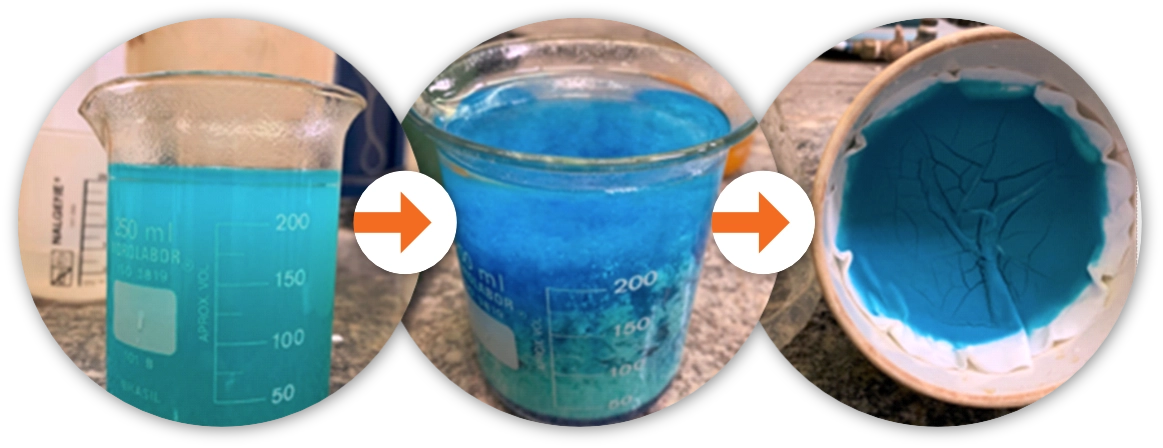
Before and After application of RemTech
How does RemTech compare?
| Treatment Criteria | Conventional Alkalizing Reagents |
Standalone Oxidants | RemTech |
|---|---|---|---|
| Heavy metal precipitation | Yes | No | Yes |
| Hydrocarbon treatment | Partial | Yes | Yes |
| Oil and grease treatment | Yes | Partial | Yes |
| Aromatic compounds (BTEX, PAHs) | Partial | Yes | Yes* |
| pH correction | Yes | No | Yes |
| Sludge generation | Medium to high | Variable | Lower sludge generation** |
| Preparation requirements | Often requires dilution, slurry preparation, or dust handling | May require dilution and controlled dosing | Liquid, direct dosing |
* Acts through pH increase, controlled oxidation, contaminant precipitation, emulsion destabilization, and improved physicochemical separation.
** Depending on water chemistry, contaminant profile, and operating conditions.
How to Apply RemTech
1. RemTech
RemTech is dosed directly into the treatment tank under continuous agitation during the pre-treatment stage. Acting as an alkalizing and oxidizing reagent, the biopolymer increases pH, promotes controlled oxidation, and converts dissolved contaminants into precipitable forms, supporting the removal of heavy metals, hydrocarbons, oils, and greases prior to solids separation.
2. Coagulant or Coagulant/Flocculant
Following RemTech application, coagulants or integrated coagulant/flocculant systems are applied according to water chemistry, contaminant profile, and treatment objectives. This stage promotes contaminant destabilization, particle agglomeration, clarification, and sludge separation.
3. Optional Complementary Oxidation
For water streams containing biological load, ammonia, nitrate, phosphate, or other nutrient-related contaminants, additional oxidizing reagents may be incorporated to support the overall physicochemical treatment process and optimize downstream contaminant removal.
4. Clarification and Solids Separation
Following chemical treatment, the precipitated and coagulated contaminants are removed through settling, flotation, filtration, or other solids separation processes according to plant design and treatment objectives.
Technical Notes
Depending on water chemistry and process design, some treatment systems may operate without a separate flocculant, as the selected coagulant may provide sufficient particle agglomeration and clarification performance.
When complementary oxidizing reagents are required, the dosing sequence may vary according to contaminant profile, reaction kinetics, oxidation demand, and process objectives. Oxidants may be applied before, together with, or after RemTech depending on the treatment strategy.
Where RemTech is Used
RemTech can be applied across water and wastewater treatment operations involving heavy metals, hydrocarbons, oils and greases, pH adjustment, sludge reduction, and complex physicochemical treatment challenges.
Water and Wastewater Treatment
Supports alkalinization, controlled oxidation, coagulation, and contaminant removal processes across municipal, industrial, and environmental water treatment systems.
Mining and Metal Processing Effluents
Helps treat acidic water streams and dissolved metals such as arsenic, manganese, chromium, lead, iron, nickel, and other difficult-to-remove metallic contaminants.
Oil & Gas and Hydrocarbon-Contaminated Water
Supports the treatment of hydrocarbons, oils, greases, and BTEX-related aromatic compounds in produced water, industrial wastewater, and contaminated process water streams.
Physicochemical Treatment Systems
Integrates with existing coagulation, flocculation, oxidation, clarification, and solids separation processes across a wide range of water treatment applications.
Operations Seeking Sludge Reduction
Helps reduce sludge generation, handling requirements, and downstream disposal volumes compared to conventional alkalizing reagents such as lime, caustic soda, and soda ash.
Environmental and Process Water Applications
Applicable to contaminated water, process water, wastewater reuse, polishing, and other treatment operations requiring efficient physicochemical contaminant removal.
RemTech in the field
Metallurgical Effluent • Brazil
50% Lower Sludge Generation
RemTech reduced sludge generation by up to 50% during metallurgical effluent treatment operations while lowering treatment and disposal costs by 32.8% and reducing alkalizing reagent consumption by 76% compared to conventional lime-based treatment systems.
Learn More...
Standards and compliance
Laboratory testing before full-scale application is recommended to confirm process compatibility, optimize dosage, and validate treated water quality according to local regulatory requirements, site-specific discharge criteria, and operational objectives.
Relevant Industry References
Physicochemical Water Treatment: Applicable to treatment strategies involving pH adjustment, controlled oxidation, contaminant precipitation, coagulation, flocculation, and solids separation across municipal, industrial, mining, and environmental water treatment operations.
Heavy Metals and Inorganic Contaminants: Applicable to treatment processes involving dissolved metals such as arsenic, manganese, chromium, lead, iron, nickel, and other dissolved inorganic contaminants.
Hydrocarbons, Oils, and Greases: Applicable to water and wastewater treatment involving hydrocarbons, oils, greases, and aromatic compounds including BTEX-related contaminants.
ASTM & Standard Methods
ASTM D2035: Standard practice for coagulation-flocculation jar testing of water.
ASTM D3370: Standard practices for sampling water from closed conduits.
Standard Methods for the Examination of Water and Wastewater: Widely adopted analytical methodologies for water quality characterization, process optimization, and treatment performance validation.
Environmental Profile
Liquid Seaweed-Derived Reagent
RemTech supports reduced sludge generation, lower reagent consumption, and more efficient physicochemical treatment operations compared to conventional alkalizing reagents, depending on water chemistry and operating conditions.
Technical Note: RemTech performance may vary according to contaminant composition, pH conditions, oxidation demand, reagent selection, mixing efficiency, hydraulic retention time, and treatment system configuration. Laboratory and field-scale evaluations are recommended before full-scale implementation to optimize dosage strategy and validate treatment performance.
Frequently Asked Questions
What is RemTech used for?
RemTech is used for water and wastewater treatment applications involving dissolved heavy metals, hydrocarbons, oils, greases, and BTEX-related compounds across industrial, mining, environmental, and municipal operations.
Can RemTech be integrated into existing water treatment systems?
Yes. RemTech can be integrated into existing physicochemical treatment systems with minimal process modification depending on plant configuration and treatment objectives.
Does RemTech work in industrial wastewater treatment?
Yes. RemTech was developed for industrial wastewater treatment applications involving acidic effluents, dissolved metals, hydrocarbons, and complex contaminant profiles.
What contaminants can RemTech help treat?
RemTech supports the treatment of contaminants including arsenic (As), manganese (Mn), aluminium (Al), chromium (Cr), lead (Pb), iron (Fe), nickel (Ni), oils, greases, hydrocarbons, and BTEX-related aromatic compounds.
Does RemTech reduce sludge generation?
Yes. Depending on operational conditions, RemTech applications may reduce sludge generation by around 33% compared to conventional alkalizing reagents such as lime and caustic soda.
Does RemTech require slurry preparation or pre-dilution?
No. RemTech is a liquid formulation that can be dosed directly into the treatment system prior to coagulation and flocculation stages without requiring slurry preparation.
How does RemTech work?
RemTech acts as an alkalizing and oxidizing reagent by increasing pH and promoting controlled oxidation, converting dissolved contaminants into precipitable forms prior to coagulation, flocculation, and solids separation.
Where can RemTech be applied?
RemTech can be applied across municipal, industrial, mining, environmental, and process water treatment operations involving dissolved metals, hydrocarbons, oils and greases, sludge reduction, and physicochemical contaminant removal.
Can RemTech replace lime or caustic soda?
In many physicochemical treatment processes, yes. RemTech acts as an alkalizing and oxidizing reagent that may replace conventional reagents such as lime and caustic soda depending on water chemistry and treatment objectives.
 English
  Português do Brasil
  Español
  العربية
  Français
  Italiano