
Sludge Reduction in Industrial Wastewater Treatment: How RemTech Reduces Reagent Consumption
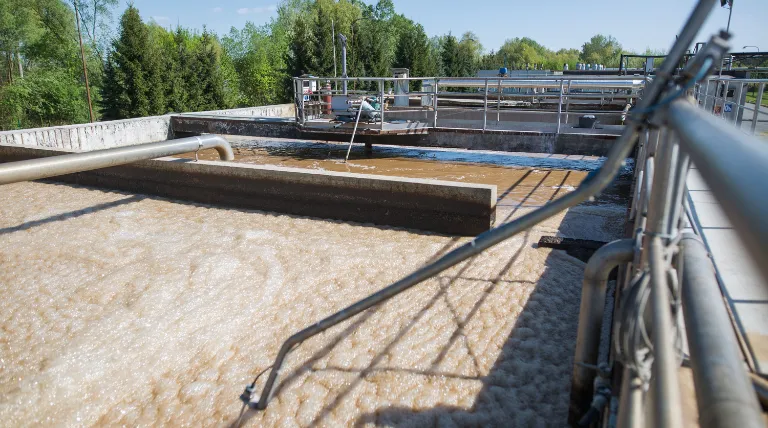
Sludge generation and disposal create significant operational and economic challenges for industrial wastewater treatment plants. Companies must manage chemical reagent costs and, in addition, store, dewater, transport and dispose of the residuals produced during treatment.
In conventional physicochemical treatment, operators use hydrated lime to adjust pH, neutralize acidity and promote metal precipitation. Depending on wastewater characteristics and process conditions, they may also use other treatment chemicals, such as caustic soda and soda ash.
Hydrated lime is a traditional reagent with a relatively low purchase cost. However, it can increase the amount of solids generated during treatment. Some of the lime may not fully react with the wastewater; as a result, it may become incorporated into the sludge, increasing the amount of residuals that operators must dewater and dispose of. Under certain process conditions, scaling may also develop in equipment and piping, increasing maintenance requirements.
Facilities can evaluate RemTech as an option to optimize physicochemical treatment, reduce reagent consumption and lower sludge generation. Laboratory tests with coal mining wastewater showed sludge reductions ranging from approximately 33% to 65%. In addition, a continuous industrial application in the metallurgical sector achieved up to 50% less sludge by volume and up to 76% lower reagent consumption.
MetaFLO developed RemTech as a concentrated liquid biopolymer derived from seaweed for physicochemical water and wastewater treatment applications. Its formulation combines alkalizing and oxidizing properties. This combination allows RemTech to support pH control and the reactions involved in treatment, with the potential to reduce reagent consumption and sludge generation.
How does this substitution work in practice?
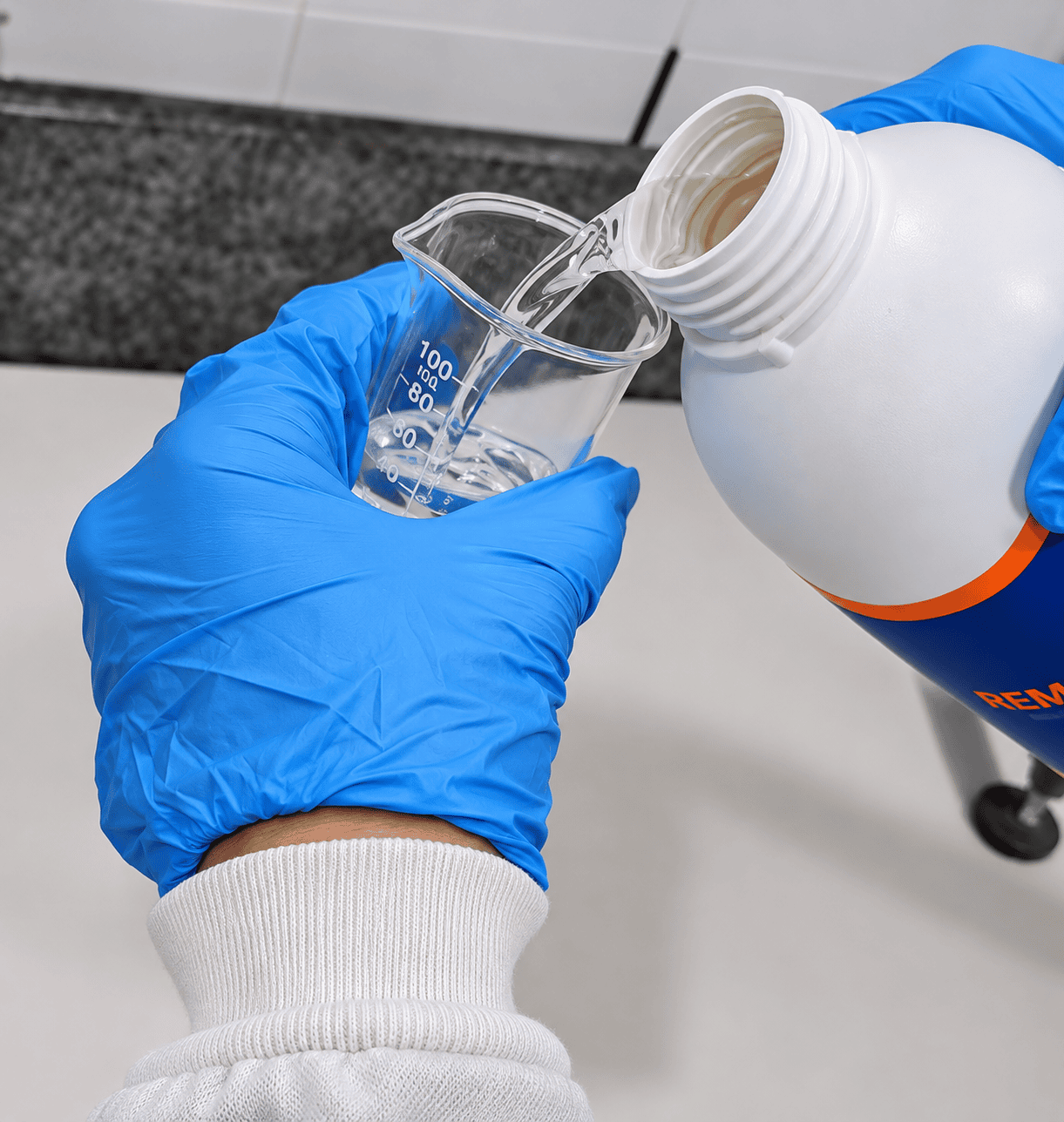
RemTech Liquid Biopolymer
Why Can Hydrated Lime Increase Sludge Generation?
Hydrated lime can raise pH and promote the precipitation of dissolved metals, which makes it a widely used reagent in wastewater treatment. However, its application has some limitations.
Because suppliers provide lime as a mineral powder, operators must prepare and disperse it in water before use. In addition, its limited solubility means that some particles may remain incompletely dissolved, depending on preparation and application conditions.
When operators use large quantities, some of the lime may remain in the system without directly participating in neutralization reactions. These particles can then become incorporated into the solids formed during treatment, increasing the amount of residuals that operators must remove.
In practice, the resulting sludge may contain both contaminants removed from the wastewater and the reagent used in the process.
How Does Lime Affect Sludge Formation?
Excess mineral particles and calcium compounds can increase the mass of solids and affect floc formation during coagulation and flocculation.
Under certain conditions, these flocs may develop a more open structure that retains water between particles. As a result, the sludge may occupy more volume and become more difficult to dewater.
The more water and solids the sludge retains, the more effort operators may need to process, transport and dispose of it.
How Does RemTech Work in Wastewater Treatment?
Replacing hydrated lime with RemTech changes how operators introduce the reagent into the process and how it participates in treatment reactions.
RemTech is a concentrated liquid biopolymer derived from seaweed. It has alkalizing and oxidizing properties, and operators can adjust its dosage to the wastewater characteristics and operating conditions of each application.
Unlike hydrated lime, RemTech does not add mineral particles from lime to the process. Therefore, it reduces one source of additional solids that may become incorporated into the sludge.
Lower Reagent Consumption
In comparative tests for pH adjustment and stabilization, RemTech required significantly less reagent by mass than conventional hydrated lime.
For example, in an industrial application in the metallurgical sector, the reagent dosage changed from approximately:
- 1.25 kg/m³ of hydrated lime, corresponding to a dosage of 0.125%;
- 0.30 kg/m³ of RemTech biopolymer, corresponding to a dosage of 0.030%.
This substitution reduced the mass of reagent added to the system by up to 76%. The lower dosage may also reduce the amount of unreacted solids incorporated into inert sludge.
Operators also observed significant reductions in neutralizing agent consumption in challenging acid mine drainage matrices. However, optimal dosages vary according to contaminant loading, free acidity and flow rate. Therefore, operators should calibrate the dosage for each application through specific laboratory testing.
Hydrated Lime or RemTech: What Are the Differences?
Reagent selection affects treatment performance as well as the amount and characteristics of the sludge generated. The comparison below outlines some differences between conventional hydrated lime treatment and the use of a concentrated liquid biopolymer.
| Criteria | Conventional Hydrated Lime Treatment | RemTech – Liquid Biopolymer Treatment |
|---|---|---|
| Form | Mineral reagent supplied as a powder | Concentrated liquid biopolymer |
| Preparation | May require preparation and dispersion in water | Liquid formulation, with dosage adjusted to the process |
| Reagent consumption | May require high dosages, depending on the wastewater | May achieve the required result with a lower reagent mass |
| Additional solids | Unreacted mineral particles may become incorporated into the sludge | Does not add mineral solids from lime |
| Sludge generation | May result in greater mass and volume of residuals | May reduce sludge mass and volume |
| Operation | May require preparation systems and scaling control | The liquid formulation may simplify reagent handling and dosing |
The performance of each technology depends on wastewater composition and operating conditions. For that reason, operators should evaluate any substitution through comparative testing that considers both treated wastewater quality and residual generation.
Results in Coal Mining Wastewater and the Metallurgical Sector
Researchers evaluated hydrated lime substitution with liquid biopolymers in wastewater matrices with different acidity levels and contaminant concentrations. The results below show the technology’s potential in two applications: coal mining and the metallurgical sector.
Coal Mining: Up to 65% Less Sludge in Acid Mine Drainage Treatment
Acid mine drainage presents a challenge for wastewater treatment in the mining sector. This wastewater may have an extremely low pH and high concentrations of dissolved metals, such as iron and manganese. To neutralize the acidity and promote contaminant precipitation, operators may need reagent dosages that generate large volumes of sludge.
In laboratory tests, researchers compared biopolymer performance directly with hydrated lime using wastewater samples from coal mining operations.
| Parameter | Sample 1 – Lime | Sample 1 – RemTech | Sample 2 – Lime | Sample 2 – RemTech |
|---|---|---|---|---|
| Initial pH | 2.46 | 2.46 | 2.42 | 2.42 |
| Reagent dosage | 0.29% | 0.17% | 0.86% | 0.31% |
| Sludge generated (g/L) | 10.41 | 7.00 | 17.92 | 6.25 |
| Sludge reduction | — | 33% | — | 65% |
In the first sample, sludge mass decreased from 10.41 g/L with hydrated lime to 7.00 g/L with the biopolymer, a reduction of approximately 33%.
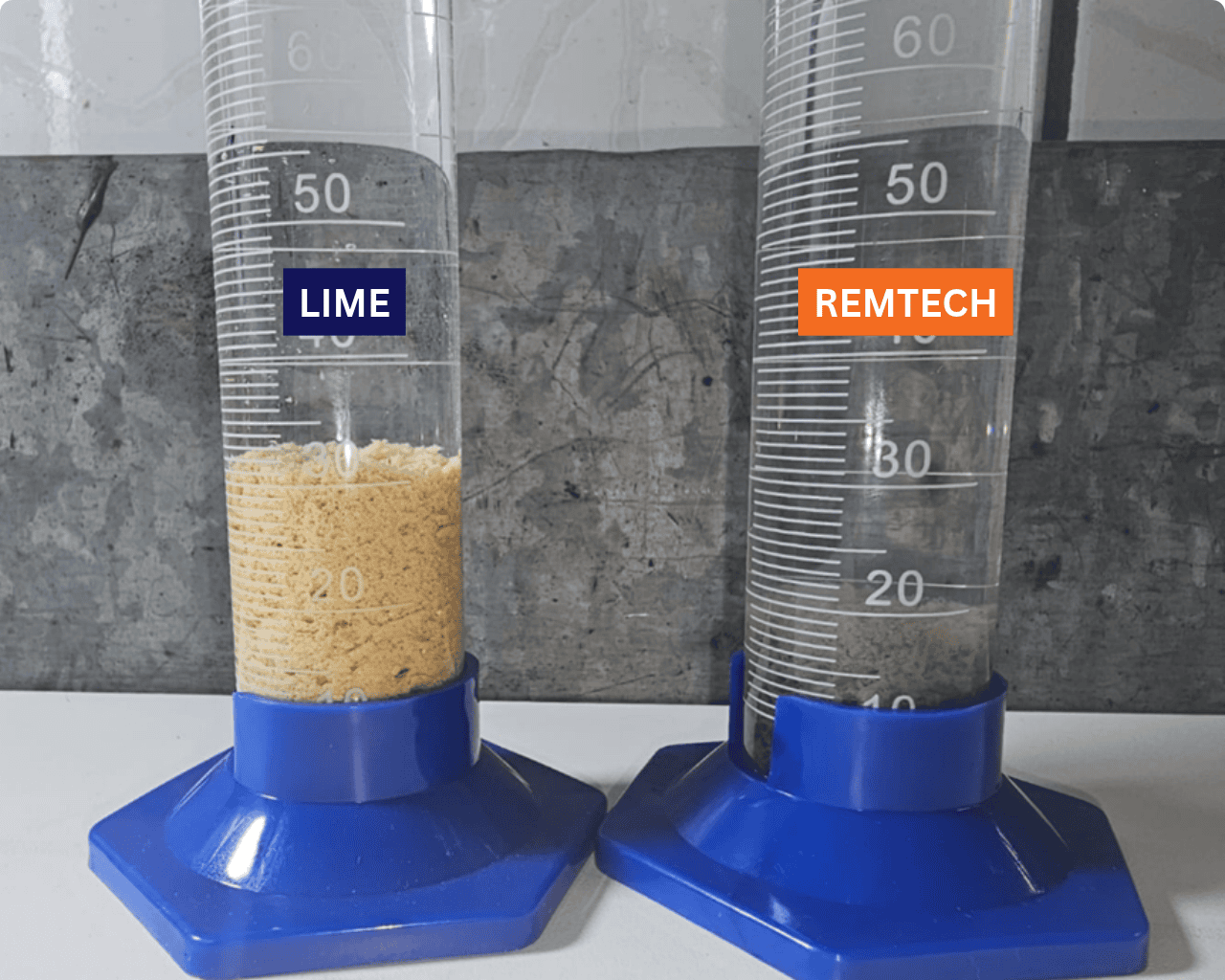
Hydrated Lime and RemTech Sludge Comparison
In the second sample, which had higher acidity and contaminant concentrations, sludge generation decreased from 17.92 g/L to 6.25 g/L, a reduction of approximately 65%.
The tests also showed reductions in dissolved iron and manganese concentrations, meeting the environmental parameters considered in the technical assessment.
Overall, the results indicate that replacing the alkalizing reagent can contribute to acidity control, metal removal and reduced residual generation.
Metallurgical Industry: Up to 50% Less Sludge by Volume
In the metallurgical sector, physicochemical wastewater treatment often involves neutralizing streams with different chemical characteristics and removing metal contaminants.
A continuous industrial application used a liquid biopolymer to optimize the treatment process and reduce residuals sent for disposal. The operation recorded:
- Up to 50% less sludge volume generated for disposal;
- Up to 76% lower reagent consumption compared with conventional operation;
- Treated wastewater quality parameters within the environmental limits applicable to the assessed operation.
In addition to reducing residuals, lower reagent requirements helped the operation optimize its routines and reduce the need to store and handle chemical inputs.
How Can Sludge Reduction Affect Operating Costs?
Once sludge forms, operators must separate it from the liquid phase, dewater and store it, then transport it for environmentally appropriate disposal. When residual volumes decrease, this chain may become more efficient.
Lower Sludge Dewatering Demand
Dewatering reduces sludge moisture before transportation and disposal. To separate water from solids, operators use equipment such as filter presses, centrifuges and dewatering presses.
When a process generates less sludge, less material may enter this equipment. Consequently, the facility may need fewer operating cycles and less processing capacity.
Lower Transportation and Disposal Costs
Transportation and final disposal account for a significant share of industrial waste management costs. These costs can vary considerably according to waste classification, distance to the disposal facility and billing criteria.
Reducing sludge mass and volume may help operators:
- Decrease the number of trips required to transport sludge;
- Reduce the need for containers and storage areas;
- Lower transportation and final disposal costs;
- Improve residual management at the industrial facility.
Lower Reagent Consumption and Simpler Operations
Reducing reagent dosage also creates an opportunity for savings. Reagent use involves more than purchase costs; it also requires transportation, storage, preparation and handling within the industrial facility.
Depending on the application system configuration, a concentrated liquid formulation may simplify some handling and dosing steps. It may also reduce the need to prepare lime suspensions.
In addition, introducing fewer mineral particles may help reduce issues associated with solids buildup and scaling, depending on process conditions.
What Is the Economic Impact of Sludge Reduction?
Companies should not evaluate the gains from replacing hydrated lime solely by comparing reagent purchase prices. Instead, a complete analysis should consider the total treatment cost, including:
- Chemical reagent purchase and consumption;
- Reagent preparation and storage;
- Treatment equipment operation;
- Sludge dewatering and processing;
- Waste transportation;
- Final disposal costs;
- Maintenance and potential operating downtime.
In an industrial application in the metallurgical sector, the operation combined up to 50% less sludge volume with up to 76% lower reagent consumption, along with other operating gains. Together, these results led to a 32.8% reduction in the overall costs of treatment and residual disposal.
This result demonstrates why companies should assess reagent performance across the entire process rather than consider only the cost per tonne of the product purchased.
RemTech: An Alternative for More Efficient Wastewater Treatment
Reducing sludge generation remains a challenge for companies seeking to optimize industrial water and wastewater treatment.
Liquid biopolymer technologies may offer benefits beyond pH control and contaminant removal when they replace conventional mineral reagents.
Results from coal mining and metallurgical applications demonstrate the potential of this approach to reduce reagent consumption, lower residual generation and optimize operating costs.
MetaFLO developed RemTech as a concentrated liquid biopolymer derived from seaweed for water and wastewater treatment applications. Its alkalizing and oxidizing properties offer an alternative for operations seeking to improve treatment efficiency and reduce sludge generation.
Each application should account for the specific wastewater characteristics and treatment plant operating conditions. Therefore, laboratory testing and operational-scale evaluations are essential to determine the appropriate dosage and validate results.
Would you like to evaluate the potential to reduce sludge volume, reagent consumption and heavy metal concentrations in your operation? Explore MetaFLO’s water and wastewater treatment solutions and discover how RemTech can contribute to more efficient operations.
 English
 Português do Brasil
 Español
 العربية
 Français
 Italiano
 Deutsch