What Is Hydrovac Waste and How Is It Managed?
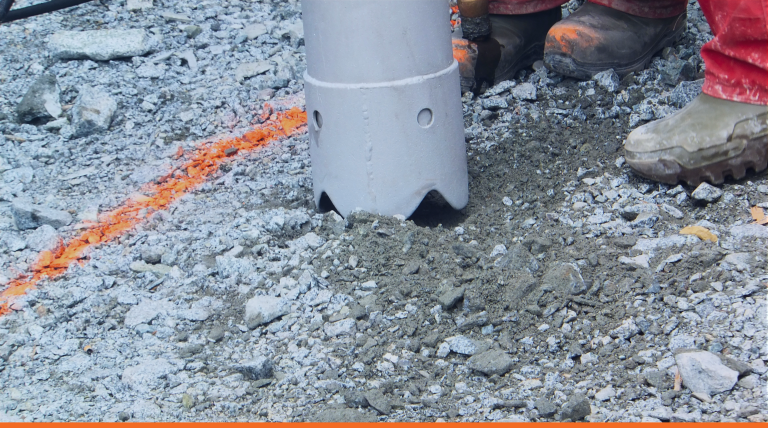
Hydrovac slurry management and on-site solidification for easier handling, transportation, and disposal.
Hydro excavation is widely used to expose underground utilities while reducing the risk of damage associated with mechanical excavation. Across Canadá and the Estados Unidos, hydrovac equipment is commonly used for utility locating, potholing, daylighting and trenchless construction.
The process, however, generates a material that requires careful management: hydrovac waste.
For hydrovac operators, contractors and receiving facilities, the way this material is handled can directly affect transportation requirements, disposal costs, site capacity and project schedules.
What Is Hydrovac Waste?
Residuos de hidropresión, also known as hydrovac slurry or hydro excavation slurry, is the mixture of soil and water removed during hidroexcavación.
During excavation, pressurized water loosens the soil while a vacuum system transfers the resulting slurry into the truck’s debris tank. The characteristics of that slurry vary considerably depending on the soil, the amount of water used and site conditions.
Hydrovac slurry may also contain materials or contaminants present in the excavated soil, such as:
- Hydrocarbons or petroleum residues
- Metals
- Salts and chlorides
- Gravel, rock and construction debris
For this reason, the material needs to be characterized and managed according to applicable local and regional requirements. Its composition, physical condition and intended destination can all affect the appropriate management method.
Why Is Hydrovac Slurry Difficult to Manage?
One of the main challenges is simple: hydrovac slurry contains a significant amount of water.
That creates several practical issues.
Transportation Capacity
Water contributes to the weight and volume being transported. When debris tanks reach capacity, trucks must stop excavation and travel to an appropriate receiving or processing location.
Space and Time for Dewatering
Operations that rely on settling, evaporation or passive dewatering may require storage areas or containment systems. Processing time can also be affected by weather and material characteristics.
Acceptance Requirements
Requirements vary by jurisdiction and receiving facility. Material may need to meet specific physical or chemical criteria before it can be transported, processed, reused or disposed of.
In the Estados Unidos, for example, EPA Method 9095B, the Paint Filter Liquids Test, is used to determine whether a waste contains free liquids for certain regulatory purposes. Requirements should always be confirmed for the specific waste stream, jurisdiction and receiving facility.
In Ontario, hydrovac material can fall within the province’s framework for liquid soil and excess soil, with specific requirements applying to its transportation, processing and final placement.
For operators managing multiple trucks or high-volume projects, these considerations can have a significant impact on daily productivity and overall waste-management costs.
Common Hydrovac Waste Management Methods
The appropriate approach depends on the material, location, applicable regulations and available infrastructure. Common methods include:
1. Transport to an Approved Receiving Facility
Hydrovac slurry can be transported to a facility equipped and authorized to receive and process the material.
This can be operationally straightforward, but hauling distance, truck availability, receiving capacity and disposal or processing fees can influence the total cost.
2. Dewatering
Some operations use settling areas, drying beds, mechanical equipment or other dewatering methods to separate water from solids.
These systems can be effective, but may require additional space, infrastructure, processing time and management of the separated water.
3. Conventional Bulking Materials
Materials such as sawdust, wood-based materials, lime or cementitious products may be used to reduce flowability and improve material handling.
Depending on the material and dosage required, conventional bulking methods can add significant mass or volume to the waste stream. That additional material can affect transportation and disposal requirements.
4. Solidification Reagents
Engineered reactivos de solidificación offer another approach by controlling free water at relatively low addition rates.
Instead of relying primarily on evaporation or adding large quantities of bulking material, the objective is to produce a non-flowable material that can be handled more efficiently.
On-Site Hydrovac Slurry Solidification
Tecnologías MetaFLO develops exclusive solidification formulations for liquid and semi-solid materials, including hydrovac slurry, HDD slurry and tunneling spoils.
Rather than using a single formulation for every application, the appropriate reagent and dosage are selected according to characteristics such as moisture content, soil composition and project requirements.
For hydrovac operations, this approach can provide several operational advantages.
Low Addition Rates
MetaFLO solidification reagents can be applied at low dosages compared with conventional high-volume bulking materials. Actual dosage depends on the characteristics of the material and should be determined through testing.
Fast Processing
With appropriate mixing and dosage, hydrovac slurry can be converted into a non-flowable, stackable material in a short processing period, reducing reliance on extended passive drying.
Reduced Reliance on Storage Areas
Faster processing can reduce the amount of space required to hold wet slurry while it settles or dries.
Simplified Material Handling
Once the required physical characteristics have been achieved, the solidified material may be easier to load, stockpile and transport using conventional material-handling equipment.
Site-Specific Formulations
Soil composition and moisture conditions vary considerably between projects. MetaFLO evaluates the material and recommends the formulation and dosage appropriate for the application rather than relying on a fixed, one-size-fits-all approach.
Where required, the solidified material can also be evaluated against applicable acceptance criteria, including tests for free liquids or leaching characteristics.
Solidification does not, by itself, change the regulatory classification of a material or guarantee that it is suitable for disposal or beneficial reuse. Final handling and destination depend on material characterization, applicable regulations and receiving-site requirements.
Can Solidified Hydrovac Material Be Reused?
Potentially, but reuse depends on the material and the applicable regulations.
Solidification changes the physical characteristics of the slurry, but it does not automatically make contaminated material clean or suitable for reuse.
Where regulations allow, material that meets the relevant chemical, physical and geotechnical requirements may have reuse opportunities. These determinations should be made on a project-specific basis and in accordance with local requirements.
Ontario’s excess-soil framework, for example, specifically addresses the processing of liquid soil through dewatering or solidification and establishes conditions that may apply before processed soil is placed at a reuse site.
Choosing the Right Hydrovac Waste Management Strategy
There is no single management method that works for every hydrovac operation.
The most appropriate solution depends on several factors:
- Slurry composition and moisture content
- Daily volume generated
- Distance to receiving facilities
- Available space
- Transportation and disposal costs
- Receiving-site requirements
- Applicable environmental regulations
- Opportunities for processing or reuse
For operations where transportation, storage or passive drying creates a bottleneck, on-site solidification can provide an alternative way to manage hydrovac slurry before it leaves the site.
MetaFLO Technologies works with contractors, hydrovac operators and receiving facilities to evaluate their material and identify an appropriate solidification formulation and dosage for their operating conditions.
Managing a challenging hydrovac waste stream?
Talk to the MetaFLO technical team about your material, operating conditions and disposal requirements.
Tecnologías MetaFLO
1-888-862-4011
 English
  Português do Brasil
  Español
  العربية
  Français
  Italiano