
MetaFLO Technologies · Solidification Reagents
Reagent for solidification of waste and sludge, by MetaFLO Technologies.
Environmentally safe solidification reagent designed to simplify the handling, transportation, and disposal of water-based semi-solid waste streams and liquid residual waste. MF006 rapidly converts high-moisture waste into stackable material while reducing free-liquid release during handling and disposal operations.
In plain terms
MF006 is a solidification reagent developed by MetaFLO Technologies and applied directly into liquid waste and water-based semi-solid waste streams to convert them into stackable material for easier handling, transportation, and disposal.
The technology is designed for liquid residual waste, sludge, slurry, spoil, and water-based semi-solid materials that require rapid solidification and improved operational handling.
Up to 10min
Rapid waste solidification
Up to 67%
Lower disposal logistics costs
0.2-1.0%
Typical dosage rates
What is MF006?
MF006 is a yellow granular solidification reagent developed for the rapid treatment of liquid waste and water-based semi-solid waste streams, transforming high-moisture material into stackable solids for easier handling, transportation, and disposal.
MF006 is a non-hazardous, landfill-friendly, and chemically inert solution that helps reduce free-liquid release and supports compliance with Paint Filter Test (PFT) requirements for waste handling and disposal operations.
The reagent is designed for liquid residual waste, sludge, slurry, spoil, and water-based semi-solid materials that require rapid solidification and operational waste management.
What problems does MF006 solve?
MF006 helps manage difficult liquid waste and water-based semi-solid waste streams that are challenging to handle, transport, stockpile, and dispose of due to excess moisture and unstable consistency.
Traditional disposal methods such as drying pits, natural evaporation, lime, sawdust, cement, and mechanical dewatering systems may increase waste mass, require additional operational space, delay disposal activities, and complicate logistics management.
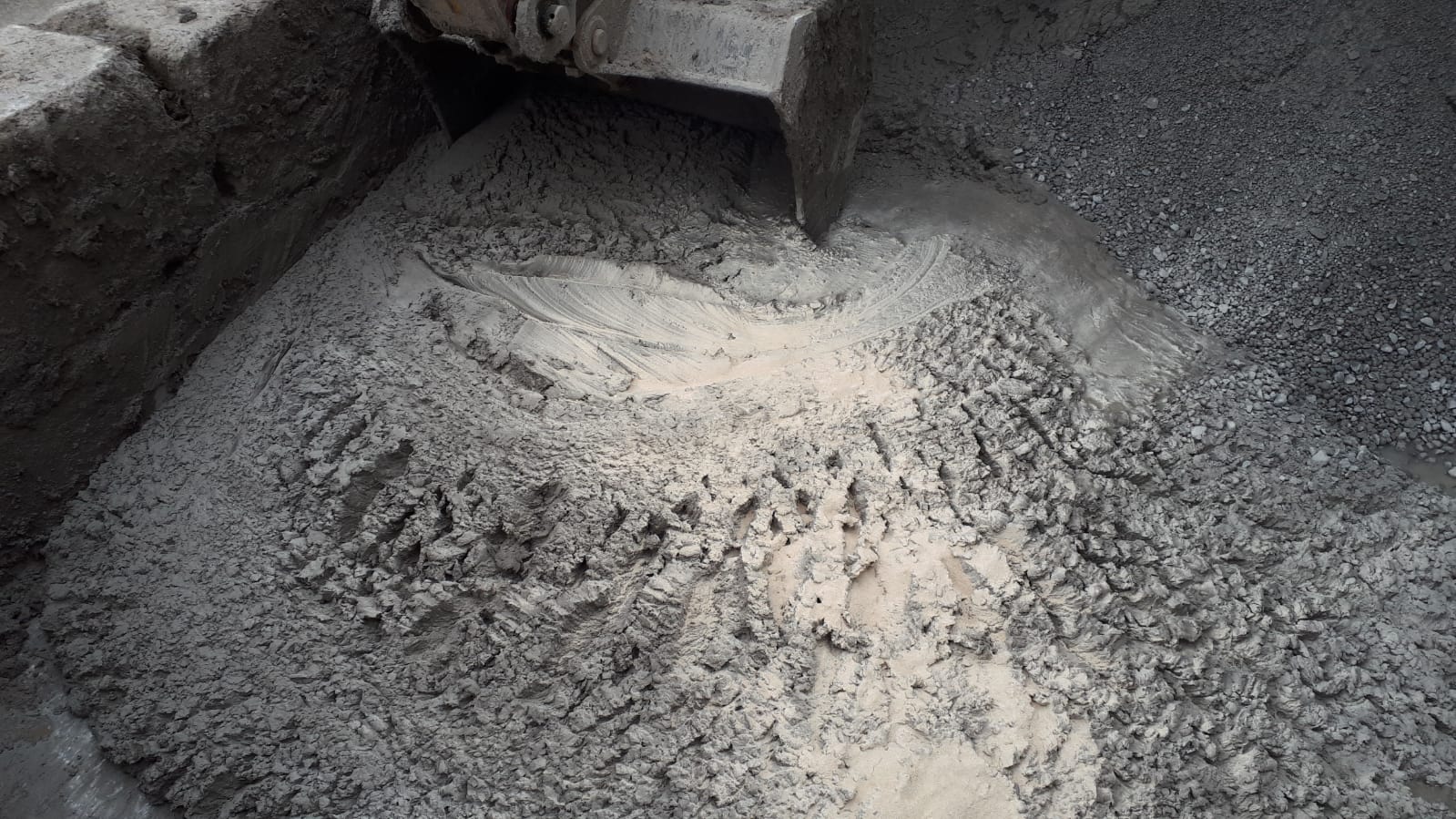
MF006 rapidly transforms unstable waste streams into stackable material for easier handling, transportation, and disposal while helping reduce free-liquid release during operational handling.
Under favorable drying conditions, the treated material may continue losing moisture through natural evaporation, helping reduce waste weight and disposal logistics costs over time.
How does MF006 work?
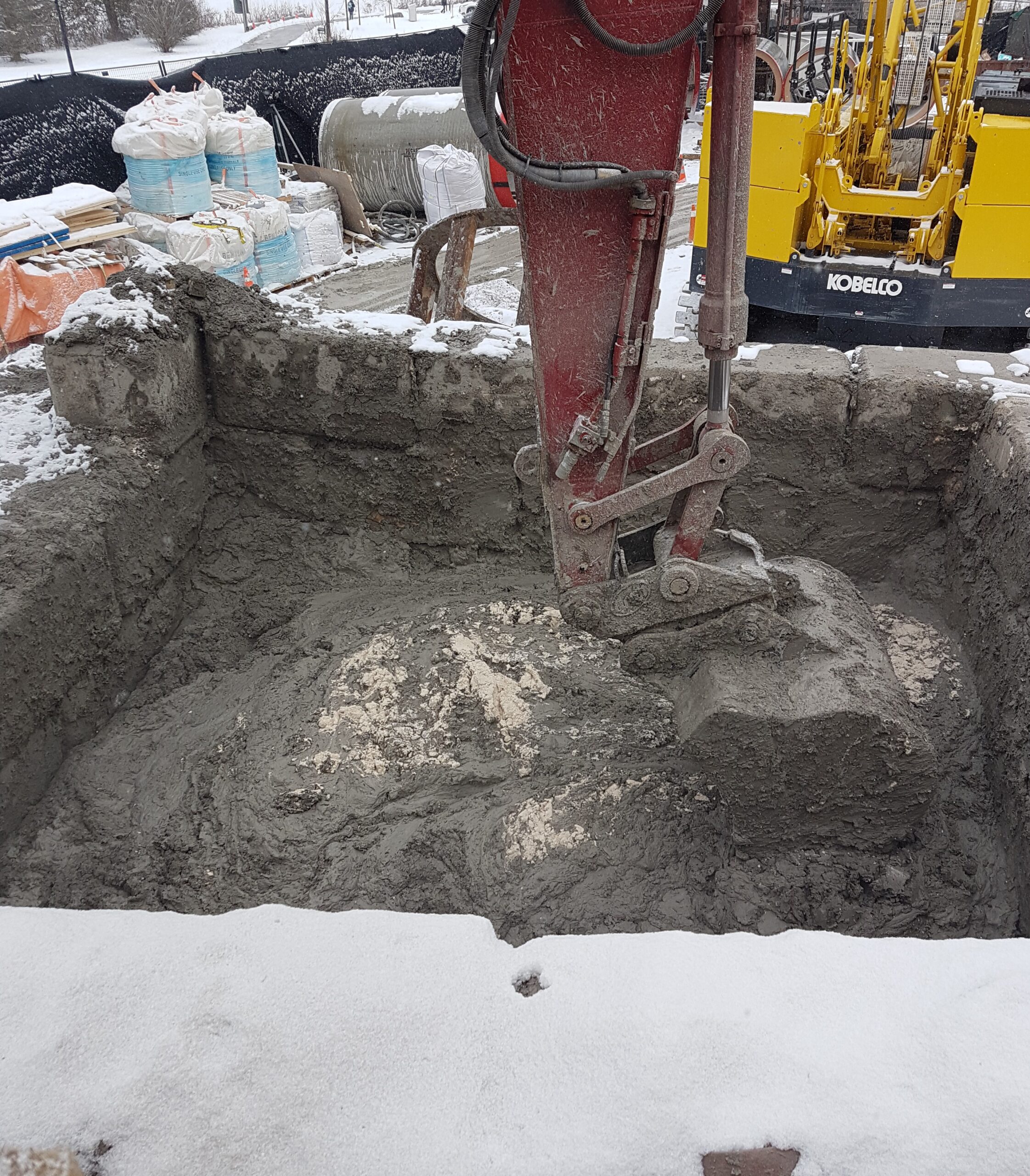
With typical dosage rates ranging from 0.2–1.0%, MF006 is applied directly onto liquid waste and water-based semi-solid material and mechanically mixed using excavators or similar equipment.
The reagent allows rapid solidification, transforming sludge, slurry, spoil, liquid residue, and water-based semi-solid waste into stackable material for easier handling, transportation, and disposal operations.
MF006 supports ongoing evaporation after treatment and may help reduce waste weight over time under favorable dry conditions.
Because the material may rehydrate when exposed to rainfall or excessive moisture, treated waste should be protected whenever possible to help maintain its solidified condition.
How does MF006 compare?
| Criteria | Lime (quicklime / hydrated lime) |
Ciment | Sciure | Mechanical drying (centrifuges) |
Natural drying |
Geobags | MF006 |
|---|---|---|---|---|---|---|---|
| Dosages | ~5.0% dosage | ~10.0% | ~30.0% dosage | — | — | — | 0.2-1.0% dosage |
| Ease of handling or mixing | Low | Low | High | Medium | Medium | Medium | High |
| Response speed until free-liquid release is reduced | ~24 h | >24 h | >24 h | Depends on centrifuge | Weeks | Weeks | <10 min |
| Physical strength gain | Limited | High | None | None | None | None | Not the objective |
| Chemical stability over time | Can release liquids | Variable | Low | — | — | — | Chemically inert |
| Exothermic reaction | Yes | May occur | No | No | — | — | Does not generate |
| Transportation cost reduction | Medium | Low | Low | Medium | Medium | Medium | Up to 67% reduction |
| Disposal cost reduction | Medium | Low | Low | Medium | Medium | Medium | Around 30% reduction |
| Classification as solid (stackable material with reduced free-liquid release) | Not always | Not always | Not always | Not always | No | Not always | Meets Paint Filter Test (EPA 9095) |
| Environmental risk | Medium / High | Medium / High | Medium | Medium | High | Medium | Low |
How to Apply MF006
1. Analyze the waste material
Evaluate the waste density, moisture content, and handling requirements to determine the appropriate MF006 dosage. Typical application rates generally range from 0.2–1.0%.
2. Apply MF006 directly onto the waste material
Spread the reagent directly over sludge, slurry, spoil, liquid residue, or water-based semi-solid waste streams in pits, tanks, ponds, stockpiles, containers, or staging areas.
3. Mechanically mix the material
Mix using excavators or similar equipment to ensure uniform distribution and full contact between MF006 and the waste material.
4. Allow solidification
MF006 allows rapid solidification, transforming the waste into stackable material in as little as 10 minutes.
5. Transport, stockpile, or dispose
Once solidified, the material can be handled using standard equipment for transportation, temporary stockpiling, or disposal operations.
Where MF006 is Used
MF006 is designed for liquid waste and water-based semi-solid waste streams requiring rapid solidification
and improved handling during transportation and disposal operations.
Sludge and slurry management
Helps solidify wet sludge and slurry materials to improve handling, transportation, stockpiling, and disposal operations.
Drilling waste and wet spoil
Rapidly transforms high-moisture drilling waste and wet spoil into stackable material for easier handling and disposal.
Hydro excavation waste
Helps manage hydro excavation waste and slurry by reducing free-liquid release and improving operational handling conditions.
Tunnelling spoil and slurry
Supports the handling and disposal of wet spoil and slurry generated during excavation and tunnelling activities.
Liquid residual waste
Helps solidify liquid residual waste into stackable material for easier transportation and disposal management.
Water-based semi-solid waste streams
Designed for difficult high-moisture waste streams that require rapid solidification and operational waste management support.
MF006 in the field
Wastewater Sludge
Cabonne Shire Project
MF006 rapidly solidified wastewater sludge into stackable material for easier transport, disposal, and waste stream management while helping the project stay on time and under budget.
Learn More...
Hydro Excavation
Hydro Excavation Project
MF006 transformed hydro excavation slurry into stackable material suitable for easier handling, transportation, and disposal management.
Learn More...
Tunnelling Waste
Toronto Crosstown Subway
MF006 rapidly solidified tunnelling slurry and wet spoil into stackable material, helping reduce transportation requirements by up to 54% while simplifying tunnelling waste management and disposal logistics.
Learn More...
Disposal and compliance references
MF006 is designed to help reduce free-liquid release and support compliance with Paint Filter Test (PFT)
requirements for waste handling and landfill disposal operations. Final disposal pathways and waste classification should always
follow local regulations, landfill requirements, and project-specific environmental guidelines.
EPA Paint Filter Test
(Method 9095B)
The United States Environmental Protection Agency (EPA) uses the Paint Filter Liquids Test (Method 9095B) to determine the presence of free liquids in waste materials for landfill disposal and waste classification purposes. Materials that release free liquid during the test are considered liquid waste.
EPA Test Method:
9095B Paint Filter Liquids Test
Common evaluation criteria:
- Absence of free liquids
- Stackable material with reduced free-liquid release
- Landfill disposal suitability
Landfill disposal and free-liquid restrictions
Many North American landfill regulations restrict or prohibit the disposal of waste containing free liquids. Paint Filter Test criteria are commonly referenced to evaluate waste acceptance for landfill disposal and transportation.
Typical operational objectives:
- Reduction of free liquids
- Improved stackability
- Reduced free-liquid release
- Lower transportation costs
- Landfill-compatible solid material
Industrial liquid waste
handling
Drilling mud, slurry, sludge, and wet industrial residues may be classified as liquid industrial waste depending on their composition and free-liquid content. Solidification technologies are commonly used to simplify handling, transportation, and disposal logistics.
Common operational sources:
- HDD drilling fluids
- TBM and EPB slurry
- Wastewater sludge
- Stormwater sediments
- Industrial sludge and spoil materials
Environmental profile
Non-hazardous formulation
MF006 is a non-hazardous, landfill-friendly, and chemically inert solidification reagent designed for liquid waste and water-based semi-solid waste management applications.
Operational compatibility:
- Compatible with standard mixing equipment
- Supports stackable material generation
- Applied directly onto wet waste material
- Helps simplify transportation and disposal logistics
- No specialized solidification infrastructure required
Common questions
What is MF006 used for?
MF006 is used for the rapid solidification of water-based semi-solid waste streams, sludge, slurry, drilling waste, and wet industrial residues. It is commonly applied in HDD, Hydro Excavation, and Tunnelling operations to simplify handling, transportation, and waste disposal.
How fast does MF006 solidify waste?
MF006 can solidify semi-solid waste streams in as little as 10 minutes, depending on the waste composition, moisture content, and mixing conditions.
What types of waste can MF006 treat?
MF006 is designed for water-based semi-solid waste streams such as drilling mud, HDD slurry, hydro excavation waste, tunnelling spoil, sludge, and other high-moisture industrial waste materials.
How is MF006 applied?
MF006 is applied directly onto the wet waste material and mechanically mixed using excavators or similar equipment until the material becomes a stackable material.
Does MF006 help reduce disposal costs?
Yes. By reducing free water and improving waste stability, MF006 can help lower disposal and transportation costs by improving handling efficiency and simplifying logistics.
Can MF006 help pass Paint Filter Test (PFT) requirements?
Yes. MF006 helps transform liquid and semi-solid waste into stackable solids that support compliance with Paint Filter Test (EPA Test Method 9095) disposal requirements.
Can MF006 be used in HDD and drilling operations?
Yes. MF006 is widely applicable for HDD drilling waste, drilling fluids, drill cuttings, and drilling mud generated during Horizontal Directional Drilling and related drilling activities.
Is MF006 environmentally safe?
MF006 is designed as a non-hazardous, chemically inert, and non-reactive solidification solution that helps reduce environmental risks associated with liquid waste transportation and disposal.
Can MF006 be used for sludge solidification?
Yes. MF006 is designed for sludge solidification applications involving industrial sludge, drilling sludge, hydro excavation slurry, and other water-based semi-solid waste streams.
Explore related solutions
MF003
High-performance solidification reagent optimized for challenging liquid waste streams and high-slump sludge.
Explore all reagents
View our complete line of environmentally friendly solidification and stabilization solutions.